


New money, old challenges: search begins for leader of south Telford revival
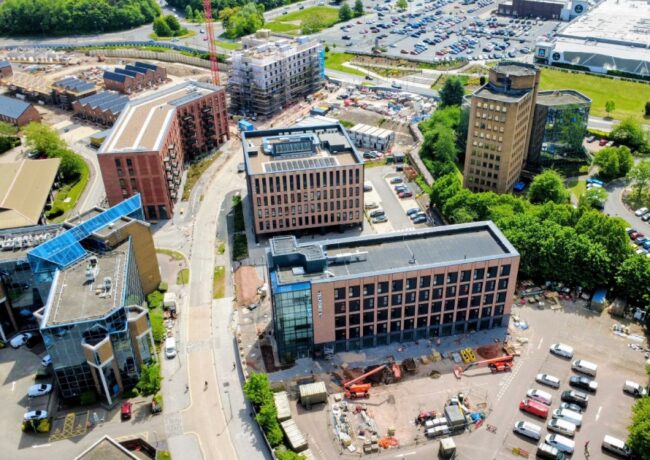
A “respected and trusted local leader” is sought to head up a £30m regeneration programme in one of the most deprived areas in the region – the latest chapter in a decades-long effort to transform one of England’s most challenged post-war housing estates.
Last year, the government earmarked Telford’s Woodside district as one of the pilot areas for its “Pride in Place” scheme, a £5bn fund designed to support over 300 of the UK’s most deprived communities.
Telford & Wrekin Council says the post-holder for a newly-created voluntary role will be a central figure in shaping the long‑term regeneration of three 1970’s-era council estates over the next ten years.
The £20m investment from central government, boosted by a further £10m from local authority coffers, is described by the council as a once-in-a-generation opportunity for south Telford.
But for residents of Woodside, the promise of renewal is perhaps all-too-familiar, following several decades of regeneration schemes, each met with varying levels of success on the estate.
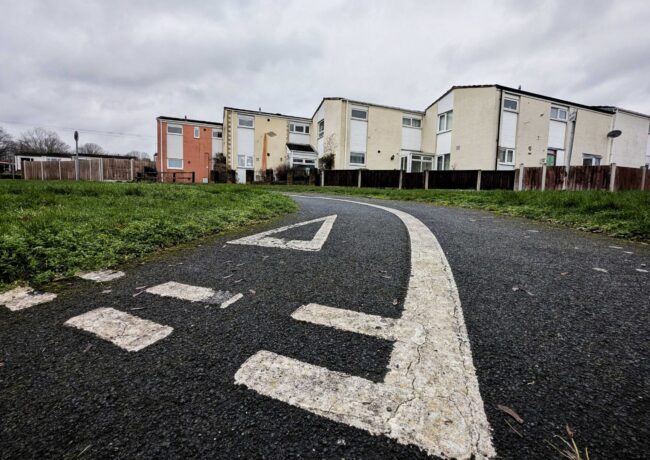
Built in the late 1960’s on former colliery land as one of the first council estates constructed for Telford, then known as Dawley New Town, Woodside’s bold Radburn-style housing layout is home to around 7,000 residents.
Around three miles to the south of Telford’s town centre, the area was once known as one of the deprived areas in the country, and despite several decades of regeneration work, remains in the bottom 10% nationally on several key deprivation metrics.
The estate, intended to provide cheap housing for employees at the town’s two, huge, industrial estates at Halesfield and Tweedale, was almost still-born – its completion coming in the early 1970’s, at the start of a global depression which largely put paid to a period of post-war expansion in the UK.
As Telford struggled to attract employers to provide jobs for its new residents during its early establishment, high levels of crime and deprivation persisted throughout the next two decades, with unemployment on the estate peaking at 17.3% in 1991.
The regeneration of Woodside achieved its first signs of lift-off in 2003, when Prince Phillip visited to officially fire the starting pistol on demolition work at the area’s notorious “courts” buildings, several interlinked four-storey blocks of flats which had become a focus for crime.
Along with a new community centre, the flats were replaced five years after their demolition by 186 modern houses built by Bellway Homes.
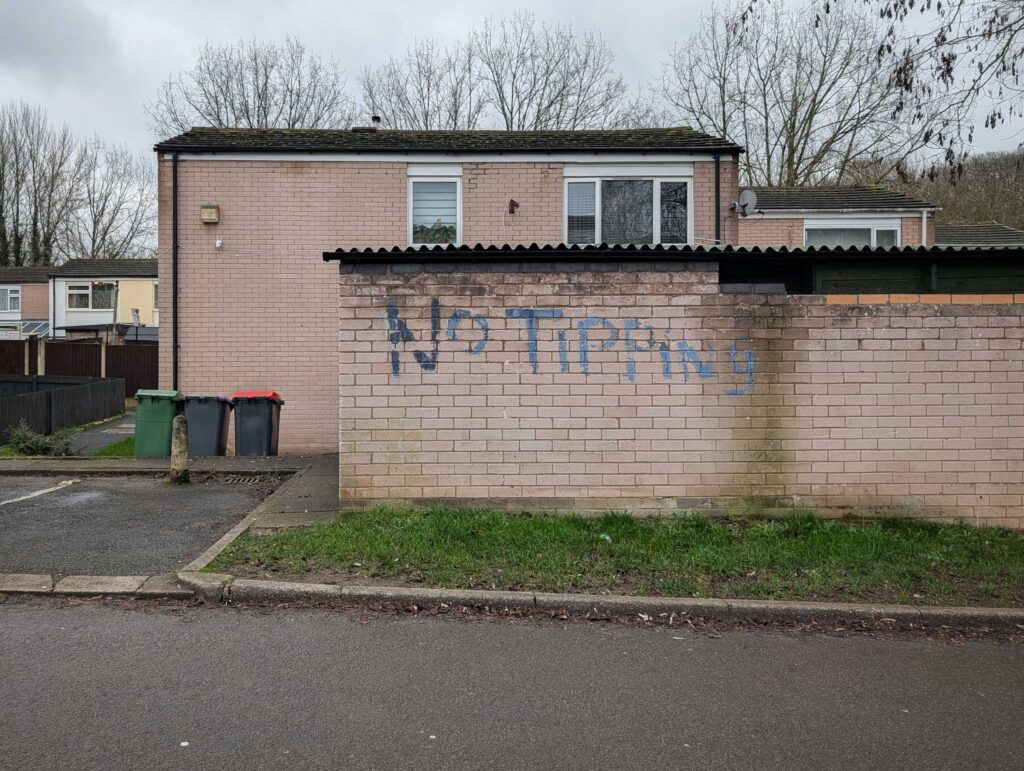
Telford & Wrekin Council hopes a £30m fund will boost south Telford over the next decade. Credit: Place Midlands
Nonetheless, and while certainly much improved, the estate still suffers from heavy levels of deprivation. According to government statistics, levels of income and employment deprivation in parts of Woodside are in the top 2% in the whole of England.
A 2023 health authority report identified that life expectancy in Woodside was on average around eight years less than in more affluent parts of Telford.
Now, the authority is hoping to take an inclusive approach on the latest efforts to regenerate the area, with an independent neighbourhood board set to be established to “oversee” how funding is allocated to the scheme.
Over the next ten years, around £3m per year will be spent on improving Woodside, as well as nearby estates at Sutton Hill and Brookside, with the resident’s board set to work with the local MP, borough councillors and community leaders.
Councillor Lee Carter, leader of Telford & Wrekin Council, said the new board would be supported “all the way” to ensure the programme was a success.
“We know that this is a once in a generation opportunity to make a real difference, that’s why we have added £10 million of extra Council funding, we’re making this investment go even further – ensuring areas of South Telford have the money and the momentum to thrive and look confidently to the future,” he said.
“This £30 million programme will enable both short-term physical regeneration and more importantly long‑term, transformative projects to be developed with and for the people who live in South Telford.”
The authority says that once its chair is appointed, work will get under way forming the board, which is says will include residents, community organisations, schools, health providers and local businesses.
The deadline for applications expires on 16 February.