


Birmingham uni snaps up stricken Cube Hotel
University College Birmingham has struck a deal for the city’s Cube Hotel, a year after it first hit the market following the collapse of its former operators.
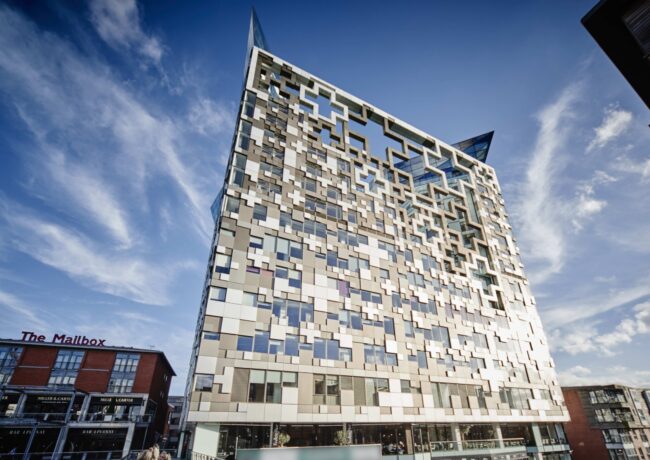
The 52-bedroom hotel occupies four floors of the 25-storey Cube building near the Mailbox, alongside a Marco Pierre White franchise restaurant, cocktail lounge and a terrace with panoramic views of Birmingham city centre on the 25th floor.
The value of the deal is undisclosed, but the hotel had been advertised with Knight Frank at £7.2m in February this year.
The business was originally put up for sale in August 2025 with a price tag of £12m, shortly after previous operators MSHA Global Investments fell into administration, but continued to trade in administration up until last month, when both the restaurant and hotel closed abruptly.
But the venue’s future as a hospitality venue has now been secured after UCB completed the acquisition of both the hotel and restaurant, with a “major redevelopment and upgrade” slated for the building over the next four months.
The university has committed £15m to wider plans to launch a portfolio of commercial hospitality venues across the city, which it says will allow its students to gain practical, real-world skills while contributing to a high-quality visitor experience.
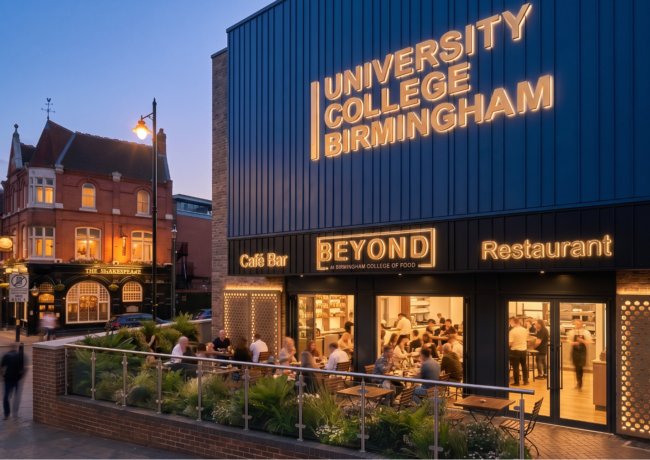
Alongside the new hotel and restaurant, the university will open a restaurant in Harborne and a new restaurant and bar at its Summer Row campus, opposite the Octagon. The existing restaurant at Birmingham College of Food will also undergo a full refurbishment as part of the investment programme.
The university says the business will support students from its hotel, hospitality, culinary arts, business and events management programmes by providing “hands-on experience in a live hospitality environment”.
“This acquisition marks the beginning of an exciting new chapter for University College Birmingham and demonstrates our continued commitment to investing in exceptional learning environments for our students,” said Professor Michael Harkin, Vice-Chancellor and Principal at University College Birmingham
“Over the past five years, we have invested more than £300 million across our campuses, Birmingham city centre and the surrounding communities, and this latest programme represents another significant step forward.
“By creating a collection of high-quality hospitality venues across the city, we are giving our students access to real-world, commercial environments where they can develop the skills, confidence and experience that employers are looking for.
“At the same time, we are strengthening Birmingham’s hospitality sector when it is facing significant challenges by creating new jobs, attracting talented professionals and supporting the city’s reputation as a leading destination for hospitality, tourism and culinary excellence. This is an investment not only in our students, but in the future of Birmingham.”
The investment follows the successful launch of a culinary school in Chelmsley Wood, which offers free training for adults and young people, aiming to give an introduction to working in hospitality or refresh existing skills to get them back into work.
The new programme represents the first phase of UCB’s ambition to establish additional hospitality venues across Birmingham, giving students a broader range of environments in which to develop their skills and prepare for successful careers.
David Cumberlidge, UCB’as commercial director, added: “These acquisitions create an incredible opportunity for our students to learn and work alongside experienced hospitality professionals in a range of exciting commercial settings.
“University College Birmingham has an outstanding heritage, the College of Food, part of our Business School, has trained many Michelin-starred chefs as well as countless hospitality leaders who have gone on to successful careers in Birmingham, the UK and around the world.
“We’re proud that these new venues will also provide opportunities for many of our alumni to return to UCB, bringing their expertise back into the classroom and workplace to inspire and develop the next generation.”