


INTERVIEW | Paul Richards: I am not ready to ease off
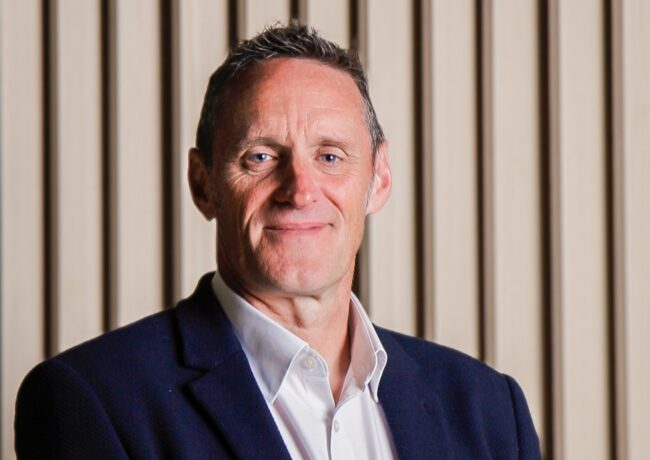
After 10 years shaping and implementing a regeneration programme that has helped establish Stockport as one of the region’s most investible places, Paul Richards is leaving for an even bigger challenge in the West Midlands. He spoke to Place about a decade of blazing a trail in Greater Manchester.
You can listen to the podcast recording of the interview here
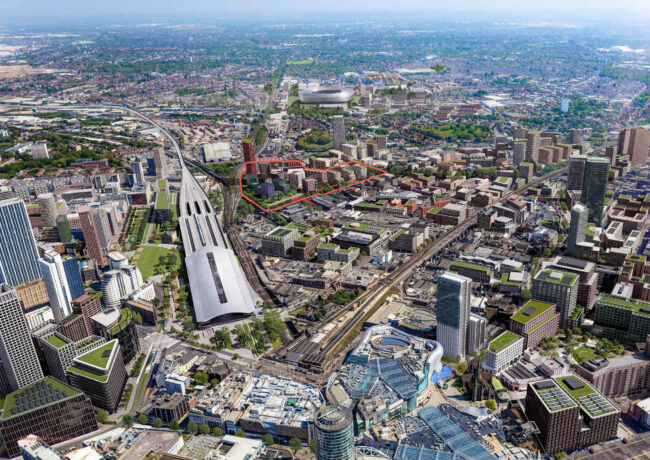
Today, Richards has started a new role as chief officer of Birmingham East Mayoral Development Corporation, an organisation that is to preside over a regeneration programme that includes a £3bn sports quarter anchored by a new stadium for Birmingham City FC, the £4bn Birmingham Knowledge Quarter, the £2bn Smithfield development, and the future HS2 Curzon Street Station.
The challenge is a big one, even for Richards, who was the first chief executive of an MDC anywhere in the UK. Birmingham East is nearly triple the size of Stockport’s own MDC area.
The size of the challenge – which has a GDV of around £11bn – is exactly the reason he couldn’t pass up the role.
“I’ve been ambitious throughout my career,” Richards said. “I don’t think I’m ready to ease off and not push on. I like getting stuff done. I like challenges. I like a different problem.”
His new role allows him once more to focus solely on regeneration. For the last two years, Richards has been Stockport Council’s deputy chief executive, a role that pulled him away from the thing he enjoys most.
Despite the obvious enthusiasm for his next chapter, Richards admits the excitement of heading up arguably the country’s most exciting regeneration programme is tinged with sadness.
“It does feel that I could have stayed in Stockport for the rest of my career,” he said.
“I can’t think of a single day in my nearly 10 years there where I’ve woken up in the morning and thought ‘I don’t want to go and do that today’, because I love it.”
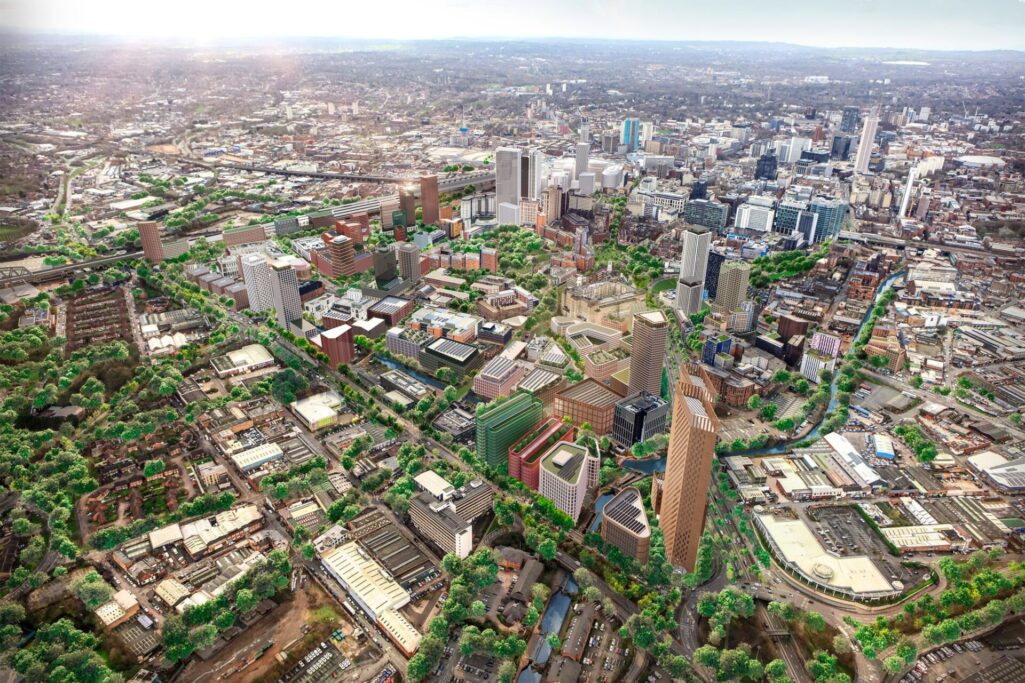
Birmingham’s proposed knowledge quarter is worth £4bn to the city. Credit: Woodbourne
Having worked in the private sector for the majority of his career, Richards did not envisage ever stepping into the comparatively staid world of the public sector before he did just that in 2017.
“I had a perception of the public sector that was kind of slow and clunky,” he said.
“If you’d asked me the day before I had the conversation about going to do it, I would have said never in a million years.”
Richards admits now that moving into the public sector has not only changed his view of it – “there are more levers to pull than when working for a private sector organisation” – but also changed him as a person.
While no more patient now than he was a decade ago – Richards paints himself as a grouchy, impatient so-and-so – working as a public servant has allowed him to see the bigger picture.
“When I worked for my variety of private sector employers, it was all pretty simple,” he said. “Working in the public sector, there’s so many overlaps of things you’ve got to consider for the best outcome for residents and businesses. It’s a blessing and a curse at the same time.”
Within the property sector, Richards is seen as a man who gets things done and is often looked to as the biggest factor in forging Stockport’s current reputation as “the poster child” of regional regeneration, as he puts it.
Despite being held in such high regard by a private sector that demands high standards of its public sector partners, Richards refuses to take too much credit.
“Anything we have done has never been just me. It’s foolish for anyone to think they can do anything on their own,” he said.
“It’s always a team effort. I’ve been really lucky that I’ve been able to surround myself with really good people.”
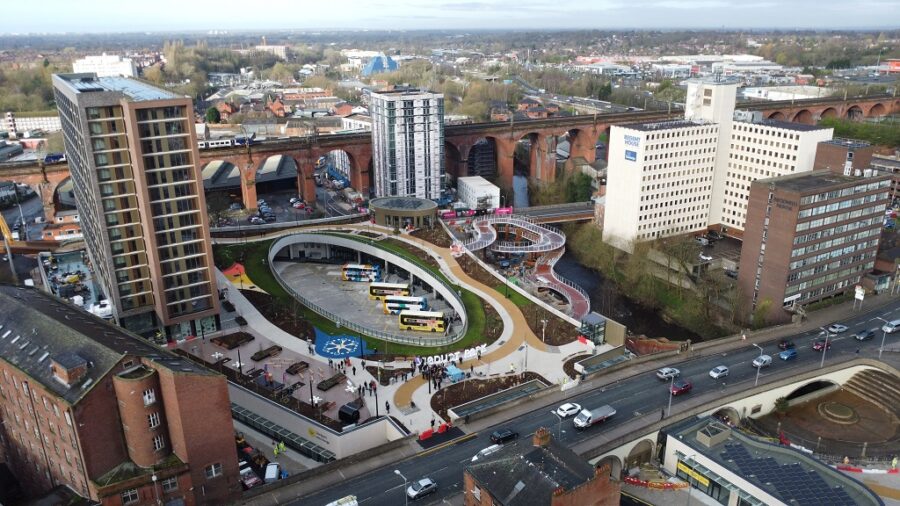
The success of Stockport MDC and projects like the interchange have paved the way for similar models across GM and the rest of the country. Credit: via Stockport Council
One project that will perhaps define Richards’ Stockport legacy and epitomises the partnership model he has championed for the last 10 years is Stockport Interchange.
The rundown former bus station has been replaced with a modern interchange. It features a build-to-rent scheme, a new town centre park, and a seamless walking and cycling link between the train station and the town centre.
The project was complex and required a “collective vision” to achieve, Richards said.
After eight years of lever-pulling to get the interchange done, Richards allowed himself a moment at the opening ceremony in 2024 to look around and think, “Yeah, that was all right.”
“If there’s one thing that’s emblematic of Stockport’s regen journey, it has to be the interchange,” he said.
Eight years is not an uncommon length of time to deliver a complex project involving numerous stakeholders. Some on the outside, perhaps understandably, thought the vision for the interchange might never come to pass. They made Richards all the more determined to make sure it did.
“I love to prove people wrong, of course I do, I’m a very small-minded man,” Richards joked. “Someone telling you that you can’t do something: nothing could be more of an incentive for me,” he said.
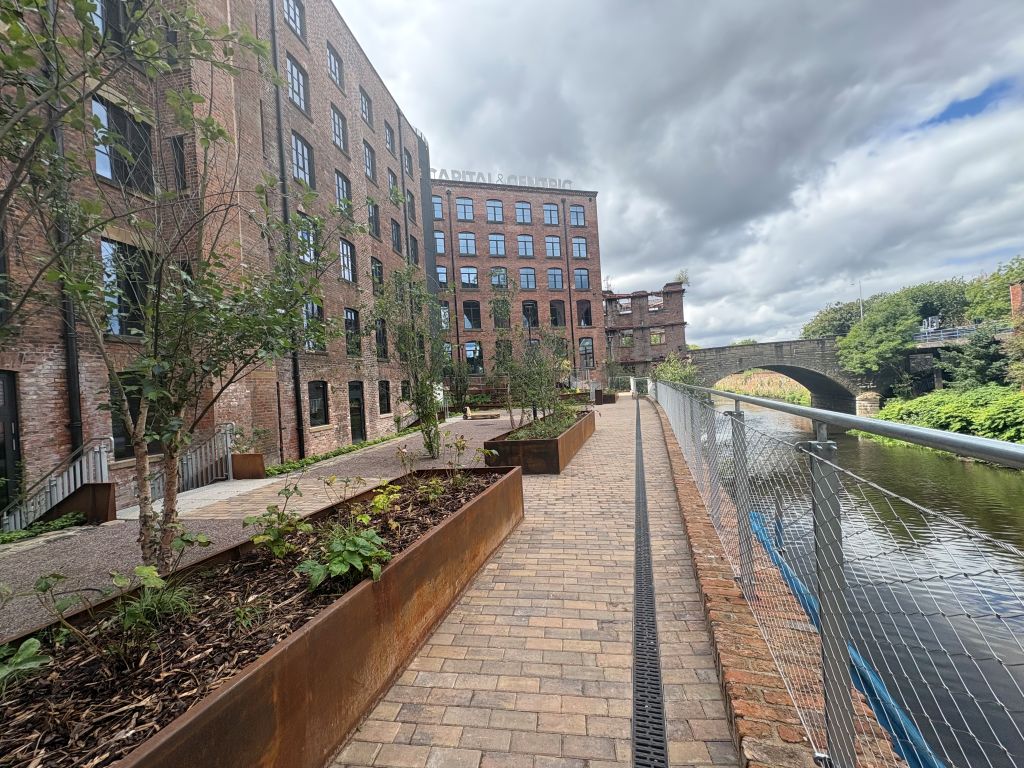
The council funded Weir Mill. Credit: PNW
As evidenced by the interchange project, regenerating a town takes a long time. Inevitably, Richards leaves behind some unfinished business.
One project he might have hoped would be wrapped up by now is the preparation of a new local plan for Stockport, which will outline where homes and employment space will be delivered across the borough over in the short to medium term.
The local plan has been a long time in the making and will provide the council with a more stable foundation for decision-making. The authority effectively ceded control of its Green Belt six years ago when it voted to pull out of the Greater Manchester Spatial Framework, the joint planning strategy for the city region, without being the evidence it had enough allocated land to deliver on its housing target.
It was a decision driven by politics and a desire to protect the borough’s Green Belt, but it has had the opposite effect, opening up areas like Bramhall to speculative development.
Stockport is expected to finally submit its revised planning framework to the government before Christmas, but much of the damage, for those who see it that way, has already been done.
If the decision to break ranks regarding the GMSF frustrated Richards, he doesn’t show it.
“It’s a thing that happened, and we can’t undo what’s been done. Dwelling on it is just wasted energy,” he said.
“Our job as officers is to make recommendations, but it’s never to make decisions. If I wanted to do that, I would have become a politician.”
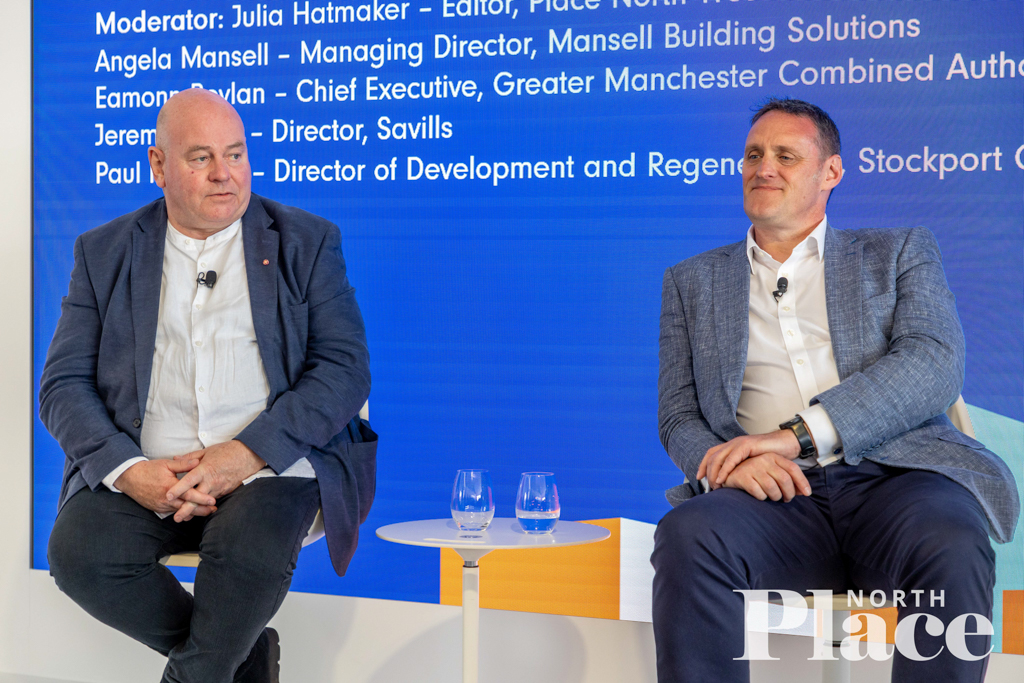
Richards [right] with the late Eamonn Boylan, one of many individuals who helped catapult Stockport. Credit: PNW
The sluggishness that has characterised Stockport’s local plan process is a blot on the borough’s copybook of recent years but has done little to temper the positive narrative around many have worked so hard to craft.
Alongside the interchange, Stockroom – the town centre library-cum-community hub that has gone some way to reinventing the Merseyway shopping centre in a post-retail age – and Capital&Centric’s redevelopment of the crumbling Weir Mill, which the council took a punt on funding, are among the recent successes that have ensured Stockport has become something of a blueprint for regeneration. There is a reason MDCs are now popping up across the country.
For Richards, it is not all about the big shiny stuff. Some of the smaller interventions also stick in the memory: an art trail to get people engaging with the town centre and moving the Christmas lights switch-on to a weekend so people could actually attend, are two examples.
“We want people to have stuff to come and do in Stockport,” he said. “It doesn’t all have to cost money.”
In Catherine Chilvers, who is now spearheading the Stockport regeneration initiative, the town, Richards said, has a “worthy successor”, but the market will still undoubtedly view Richards’ departure as a blow.
During his tenure, he has blended ambition and pragmatism and a deft hand with hard headedness to overcome obstacles and elevate Stockport above any other Greater Manchester town into a new era that is appreciated by locals and admired by outsiders.
Naturally, he hopes Stockport’s star will continue to rise and that the ethos he has tried to instil in his team over the last decade – moving at pace, being brave, and doing the right thing – will endure long after he has left for Birmingham.
If the momentum shows signs of slowing, the fact he is no longer the boss won’t prevent him from sticking his oar in.
“They don’t want a phone call from me saying you’re screwing it all up, do they?
“I can be grumpy from a distance.”