


Birmingham gears up for £22.5m cycle lane extension
A four-mile extension to a cycle route, which will link the city centre with Longbridge when completed, looks set to be approved.
An outline business case for the £22.5m extension, which currently runs as far as Selly Oak, has been recommended for approval by Birmingham City Council’s cabinet at a meeting next week – ahead of a full business case being drawn up for the scheme.
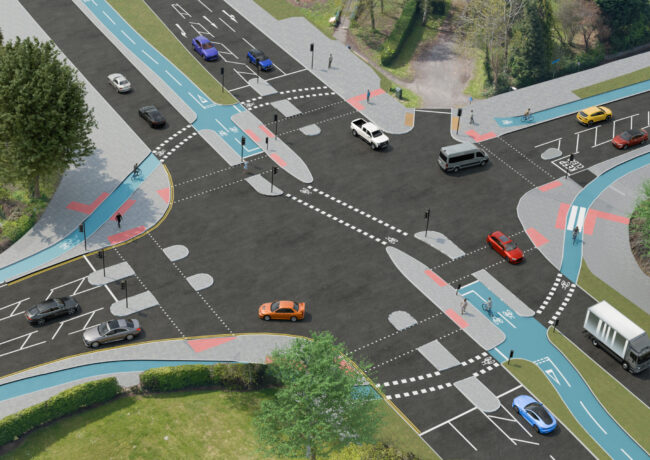
If given the go-ahead, the proposals would extend a route constructed along the A38 in 2019 as part of the Birmingham Cycle Revolution programme, by building a cycle lane down the central reservation of the busy dual carriageway into the city.
The authority says the new cycle lane will “reduce the dependency on private car usage”, and contribute towards better air quality in Birmingham. In a public consultation held in June this year, 55% of 846 respondents supported the plans.
Other options under consideration were a £5m resurfacing scheme for existing cycle lanes, and a “do nothing” option – also set to cost £600,000.
The scheme is being funded by £14.5m from central government grant funding, with a further £8m put up by the authority. The council’s contribution is funded by £4m of revenue gathered from the city’s clean air zone system, and £4m from bus lane enforcement fines.
A bus lane enforcement camera is also planned for the junction of A38 Bristol Road and Weoley Park Road, expected to create around £62,000 to be put towards the maintenance costs of the new route, expected to be around £90,000 per year.
“Responding to the climate emergency requires significant reductions in carbon emissions from transport, which cannot be achieved without a wholesale shift towards public transport and active modes,” said a report set to be discussed on Tuesday, 11 November.
“Transforming the city’s transport is fundamental to meeting the challenges of the next decade and beyond. Economic, population and housing growth will create additional demand for travel, which cannot be accommodated via ongoing car dependence.”
A full business case will be brought forward to the West Midlands Combined Authority, if the recommended scheme is approved next week.