


Hope Valley set for £6m ‘Mini Switzerland’ bus trials
A government-backed scheme is set to bring improved train and bus services to rural areas in the Peak District – part of a pilot based on European public transport networks.
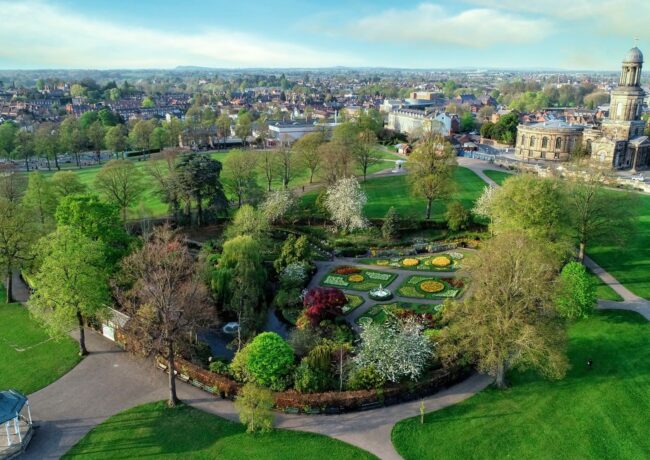
Around £6m of funding has been provided for a so-called “Mini Switzerland” pilot in the Hope Valley, which will test more frequent, reliable rural bus services timed to connect with arriving trains to support local communities and tourism.
The move formed part of a Department for Transport launch for its updated transport strategy this morning, which is set to provide extra funding for “tap and go” transport systems which join up local bus, train and tram services.
The announcement singled out the Nottingham and Derby Ride app, which was launched in December and has signed up more than 5,000 passengers in the past three months, as the “Gold Standard” for contactless ticketing systems.
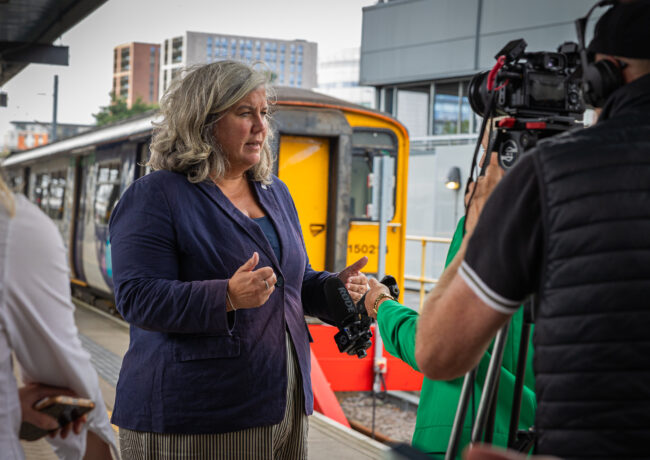
Mayor of the East Midlands, Claire Ward, who joined Transport Secretary Heidi Alexander at the event, said the national strategy is a significant step towards a “simple, joined up” transport for the East Midlands.
“We’re already seeing what’s possible through innovations like the Ride app in Nottingham and Derby, bringing journey planning and payment in one place. It shows how we can integrate buses, trams and trains so passengers can tap, travel and get where they need to be without juggling multiple tickets or apps,” she said.
“With better real-time information and stronger rural connections, including our work in the Peak District, we can build a transport network that works as one system – supporting growth, cutting congestion and improving access to jobs, education and opportunity across the region.”
The government says an extra £40m will be available for local authorities to trial digital technologies to improve transport, reduce congestion and ease disruption, one of more than 40 commitments in the strategy.
The strategy, published this morning, says a pilot payment system being developed by the West Midlands known as “Project Coral” would eventually form a national contactless solution for integrated ticketing.
“Our multi-year £30 billion transport settlement is already giving local leaders the certainty they need to invest in good transport, but it is clear that politicians in Westminster cannot truly appreciate the challenges facing Woking, Wolverhampton or Whitby, “said transport secretary, Heidi Alexander.
“That is why we have co-designed our approach with the people we will work with and aim to serve. We have been up and down the country, hearing from local leaders, industry and the public.
“Truly people-focussed transport is not something that can be delivered by government alone or overnight. We are empowering local leaders, who know their areas best, to take the reins. Their expertise will ensure this strategy’s vision and priorities are delivered in a way which best meets local needs.
“We have already seen this approach be hugely successful in areas like the West Midlands and Greater Manchester, and we want to see more communities across England feel the benefits.”