


‘Be brave and be ambitious’ | Q&A with Pat Ritchie and Simon Century
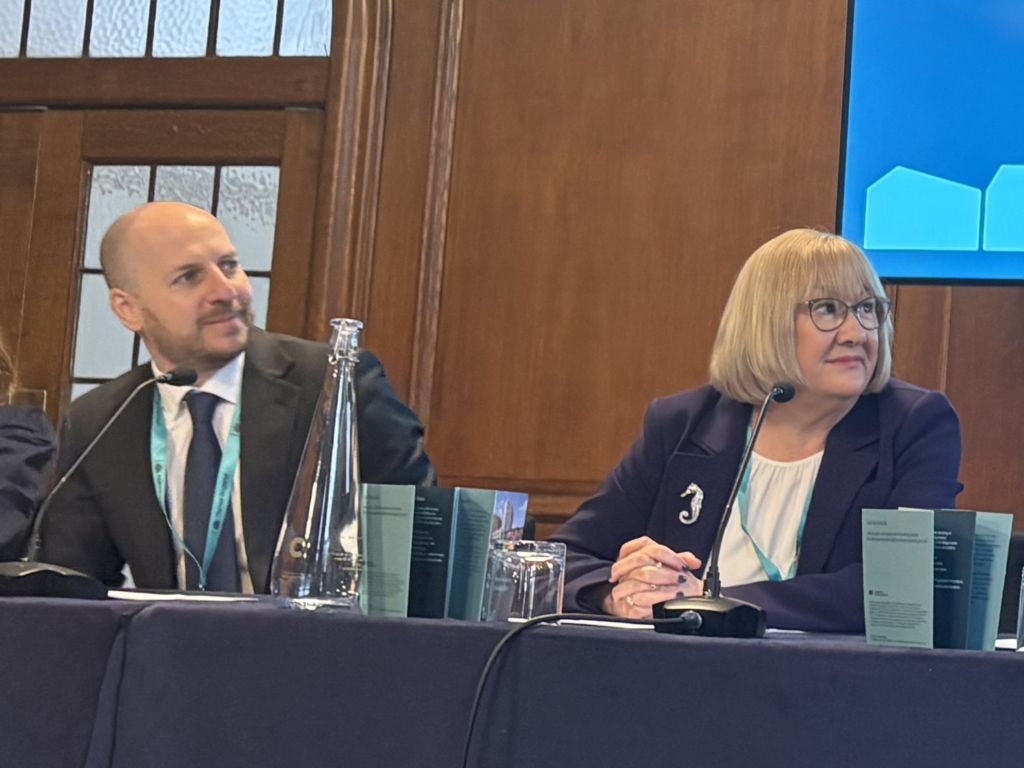
The chair of Homes England and the chief executive of the newly launched National Housing Bank sat down with Place to outline how £16bn of public funding will be mobilised to unlock housing delivery at scale.
The £16bn public funding figure – will that be split regionally, or allocated case by case? What share is headed towards the North and the Midlands?
Simon Century: We have a very clear cross-country mandate, and generally we look at this in terms of cost-benefit analysis – where we’re most likely to have the biggest impact. To be candid, there is clearly a need for new housing in every single local authority up and down the country.
More broadly, we do split investment across different types – equity, debt, and guarantees – and this is done by roughly a third in each category. We also have a clear long-term investment strategy that looks across a 10-year period: where we want to allocate capital, in what areas, and in what quantum. As part of that, we do consider regional split, but the key point is that we operate in every region, up and down the country, because the need is universal.
Pat Ritchie: The establishment of regional teams is really about getting alongside the pipeline in places like the North East, the North West, and others, and using Homes England’s tools to meet local priorities. For example, in the North East we’ve supported mayoral priorities like Forth Yards, and projects in Sunderland. In the North West, we’re working on Victoria North. We’re active in Bradford, Wakefield, and many other places.
We use a mix of tools — affordable housing grants, land, and now investment from the Bank — to support those pipelines. The bank will focus on the clearest, most investable propositions that can deliver both now and in the long-term.
Regional teams work closely with Simon’s team to ensure visibility of proposals on the ground. We also have large joint ventures, for example, the MADE Partnership with Barratt, Lloyds, and ourselves, investing across the North West and beyond. It’s really about getting the right blend of investment working through regional pipelines to support mayoral priorities.
How will you ensure funding reaches smaller towns as well as major cities?
SC: There are a couple of strands to that. First, our regional model: we have strong teams, boots on the ground, who deeply understand local markets. Across our five regions, we work closely with local partners and authorities to make sure we understand their needs.
Second, on the investment side, we support both large national partnerships and very local activity, particularly SME housebuilders. These builders might be working on one or two sites and want to scale up. We provide debt or equity support to help them grow, recycle capital, and move on to the next site.
We already operate at quite a granular level across the country, and we’re expanding that. We also work with operating partners who bring their own networks to help us reach more places over time. This is something we already do, and it’s something we’ll do much more of going forward.
The launch focused on how the launch of the NHB is a rallying call to industry. What’s your message to potential private and public sector partners?
SC: First: talk to us. Talk to us! We have large teams operating nationally and locally with flexible skill sets. If you’re struggling in any area, we have tools to help – so engage with us.
More broadly: be brave and be ambitious. The country needs the whole sector, from SME builders to large institutional investors. The UK is a great place to invest right now. So come alongside us, let’s make it happen.
PR: And give us feedback, and hold us to account on delivery.
How dependent is the long-term success of the bank on a Labour government being at the helm?
PR: The Bank is part of a number of public finance institutions, long-term bodies that invest in economic development, housing, and growth. That long-term structure allows us to respond to the market and recycle investment over time. I think it’s a testament to this government that they’ve been prepared to set up something that allows for that longer term partnering of the market, and that investment in long-term places.
These are statutory financial institutions with a long-term life, designed to partner with the market and invest in places over decades.
SC: Our mandate is to deliver more homes, more quickly. We do that through our people, the affordable housing grant programme, and the financial firepower of the bank. These are all long-term tools: the bank itself has an initial 10-year horizon. Our sole mission is to use those tools to deliver homes for people across the country, across different tenures, and at scale.
Beyond housing numbers, what metrics will you use to measure the Bank’s success?
PR: It’s worth looking at the broader investment strategy the bank sits within. That includes shaping and supporting communities and places, focusing on good design, environmental sustainability, and creating places where people want to live.
Across affordable housing, land, direct development, and the bank, the focus is on quality as well as delivery.
SC: Number of units delivered is obviously very important – it’s a key part of the mandate But when you step up a level and ask what society as a whole really needs, the answer is a mixture of things. We need more homes for sale, and that need plays out differently across the country and at different price points.
Clearly, we also need a lot more social and affordable housing, which is absolutely the bedrock of our investment prospectus and wider strategy. We also need more institutional-grade homes for rent — there’s a significant need to grow the build-to-rent sector.
Alongside that, there are other sub-sectors, such as senior living and co-living, which meet different needs at different stages of people’s lives and across different socio-economic conditions over time. A big part of our role is supporting multi-tenure communities that reflect different life stages and needs. The reality is that we haven’t delivered enough of that for many years.
So, we want to push particularly hard on areas like affordable housing and build-to-rent, working closely with institutional investors to scale delivery.
And finally, the bank will be headquartered in Leeds. Why was the city chosen?
SC: Partly because other government finance institutions, like the National Wealth Fund, are based there, so it makes sense to be co-located. But also because we care about regional balance and levelling up. Leeds is a strong financial centre, and it supports the wider ambition to spread opportunity across the country.
And, frankly, we like working there – it’s a very natural home for us.
Related Articles

Analysis - Commentary
Digbeth’s turning point will be written in what we choose to keep
Digbeth is having its moment. HS2 Curzon Street is rising just up the road, Smithfield breaks ground later this year, and the eyes of investors, tenants and residents are turning towards a corner of Birmingham that has spent decades being talked about but rarely delivered upon, writes George Isles of BWB Consulting.