


Leaders fume as Midlands councils face biggest shake-up in a generation
More than 60 councils across the Midlands are set for the biggest overhaul of local government in a generation after ministers confirmed sweeping reorganisation plans, with new unitary authorities replacing dozens of existing councils from 2028 despite fierce opposition in parts of the region.
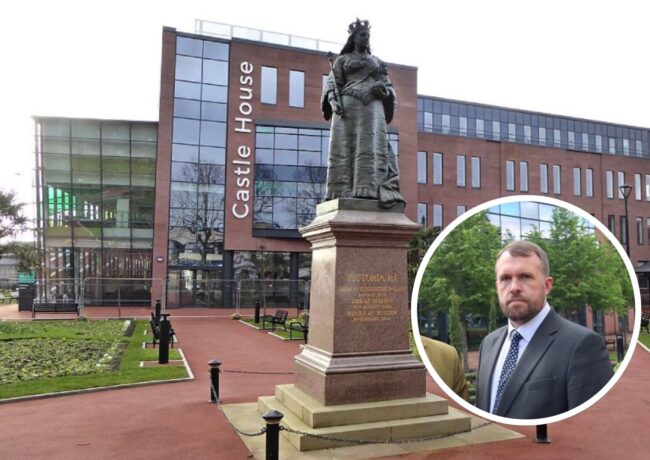
Leaders in the East Midlands are considering legal action over the moves, whi;e Newcastle-under-Lyme leader Jonathan Gullis says the borough is being ‘wiped off the map’, after the government confirmed that the council would be abolished and merged into a combined North Staffordshire unitary authority from 2028.
Staffordshire was one of 21 counties in England asked to come up with reorganisation proposals by MCHLG last year, under plans to replace old-style county councils with larger unitary authorities.
Changes elsewhere will bolster power bases in the East Midlands cities, with nine councils merged in Nottinghamshire, and ten each in Derbyshire and Leicestershire. Four unitary authorities will replace 14 existing councils in Warwickshire and Worcestershire.
Overall, the programme will abolish more than 100 existing authorities and replace them with a much smaller number of unitary authorities, affecting around 20 million people, nearly a third of England’s population.
The government says the reorganisation will simplify how council functions are delivered and make them “devolution ready”, as well as making services more efficient.
Staffordshire’s complex reorganisation picture
In Staffordshire, councils put forward five separate plans for the future governance of the area, mostly backing a North/South split, while proposals put forward by Staffordshire County Council to split the county down the middle into an east/west configuration had looked doomed from the start.
Announcing its decision, the government confirmed it had settled on proposals which merged Newcastle-under-Lyme, Stoke-on-Trent and the Staffordshire Moorlands into a North Staffordshire unitary authority, with a separate South Staffordshire administration covering the rest.
Newcastle leader and former Stoke North MP Gullis was arguably the most vocal opponent of the plan to merge authorities, having previously argued that the exercise was too costly, and would distract local authorities from delivering services for residents.
“There is nothing efficient about spending huge sums of taxpayers’ money abolishing well-run councils, transferring thousands of staff and merging complex services merely to create another layer of distant bureaucracy,” he said.
“Our residents will rightly ask why money that could have regenerated our high streets, improved parks and strengthened frontline services is instead being spent dismantling their Borough Council.
“I will never pretend that this is the right decision, because it is not. I will never claim that Newcastle-under-Lyme consented to this merger, because it did not.”
Cash-strapped Stoke gets a boost
However the move was given a warm welcome by Stoke-on-Trent City Council leader Cllr Jane Ashworth, who said that from the options available, the makeup of the new authority most closely reflected the needs of residents in Stoke, Newcastle and the Staffordshire Moorlands.
Stoke-on-Trent has a forecast funding gap of around £35m over the next three years, with significantly higher demand for services than more rural authorities – but a broader North Staffordshire authority with lower overall demands could potentially help to alleviate some of the city’s more acute cost pressures.
“This decision gives us the opportunity to unlock growth, attract investment, accelerate regeneration and create more opportunities for local people,” said Cllr Ashworth.
“It will ensure north Staffordshire has a stronger voice and can compete more effectively for jobs, funding and investment in the years ahead.”
More power for the cities in East Midlands shake-up
Derbyshire will see ten authorities merged into two unitary councils, with residents in Derbyshire Dales, High Peak, Chesterfield, Bolsover and North East Derbyshire set to receive services provided by a new council for the north area, while residents in Erewash, South Derbyshire and Derby will receive services provided by a new council for the south area.
In Nottinghamshire, nine councils will also become two unitary authorities, with Nottingham’s boundaries set to expand to take in parts of Broxtowe, Rushcliffe, and Gedling as part of a new Greater Nottingham authority.
In a combined statement, the councils said they would “continue to work together to ensure services continue and that residents and businesses remain our priority,” but not all authorities were thrilled.
The leader of Conservative-run Rushcliffe council in Nottingham, Cllr Neil Clarke, said the authority would be considering a judicial review, after the government decided to include a sizeable rump of the borough in a new Greater Nottingham council.
Meanwhile, Leicestershire leader, Cllr Dan Harrison said he was “furious, shocked and bitterly disappointed”, adding that the council was also considering a legal challenge.
“We’ve always been clear that an expanded city would be costly and disruptive. Financially and strategically, this is madness and it’s not the right decision for Leicestershire,” he said.
“This is a disastrous day for democracy. No one wanted this.”
Following the decision, and subject to parliamentary approval, the new authorities are expected to go live from April 2028.
The Midlands authorities affected are:
- Derby and Derbyshire: 10 councils being reorganised into 2 unitaries. This will let Derby expand in all directions while reflecting the county’s distinct north/south geographies and creating two strong partners in the East Midlands Combined County Authority.
- Warwickshire: 6 councils being reorganised into 2 unitaries. This will allow each new council to focus on the specific needs of its communities, tackling health inequalities in the north and improving access to services for older and rural residents in the south.
- Worcestershire: 7 councils being reorganised into 2 unitaries. This will reflect the county’s different economies and identities in the north and south, balancing scale with staying connected to communities.
- Leicester, Leicestershire and Rutland: 10 councils being reorganised into 2 unitaries. This will expand Leicester’s boundary to reflect how the city actually functions, unlocking around 30,000 homes and 67 hectares of employment land, and creating a stronger platform for future devolution.
- Nottingham and Nottinghamshire: 9 councils being reorganised into 2 unitaries. This will bring most of Nottingham’s urban area under one council, supporting the Mayoral authority’s growth ambitions and creating a more balanced urban-rural mix.
- Staffordshire and Stoke-on-Trent: 10 councils being reorganised into 2 unitaries. This will support Stoke’s growth opportunities across a natural north/south split, minimising service disruption and achieving strong financial sustainability.
- Lincolnshire, North Lincolnshire and North East Lincolnshire: 10 councils being reorganised into 4 unitaries. This will give Lincoln the space to grow while striking the best balance between urban and rural service delivery and securing Lincoln a distinct voice in devolution.
Elections to the shadow unitary authorities would take place on 6 May 2027, the government says.
Secretary of State Steve Reed said: “We’re shaking up local government so that people get the services they deserve – cleaner streets, better care, and money spent on what matters most to local people.
“These reforms create stronger, more efficient councils that lay the foundations for real devolution and the economic growth that will bring new jobs and opportunities to communities right across England.”