


Rebuilding again: Coventry’s next reinvention begins at City Centre South
As cranes rise over a £450m regeneration scheme, the poster city for post-war reinvention is betting that homes, green space and a renewed manufacturing ambition can restore confidence in its future. Can Britain’s most famous regeneration story reinvent itself one more time – and lead a green industrial revival in the process?
Stepping off the train in Coventry from Birmingham feels like the volume has been turned down a couple of notches, the intrusive roar of the second city replaced by a gentler thrum in the UK’s former ‘Motor City’.
On a chilly winter morning, the wind whistles around the modern, curtain walled buildings of Friargate, a regeneration spot near the city’s main railway station where there’s still some work to be done. Several plots lie vacant – grassed over public green space for now, but each potentially set for multi-storey, brick-tipped futures when the time becomes right.
But for now, attention is elsewhere in Coventry, as the bulldozers lay waste to an area the size of nine football pitches in the heart of the city, a £450m reboot designed to create a “vibrant, sustainable new quarter” to the south of the city centre, a mixed use development which has been dubbed the city’s largest rebuilding programme since World War Two.
That statistic is remarkable in itself. The city’s history has always been based on a seemingly never-ending cycle of reinvention, often due to the tumultuous boom and bust cycles of its signature industries, but perhaps it’s become best known in the modern era for its original approach to reconfiguring itself during the post-war building boom.
The optimism of a new wave of brutalist-inspired architects was arguably at its peak in the 1960’s – and for Coventry more than elsewhere, the times they were definitely-a-changin’.
More than five decades later, the famously modernised old city is showing its age a bit.
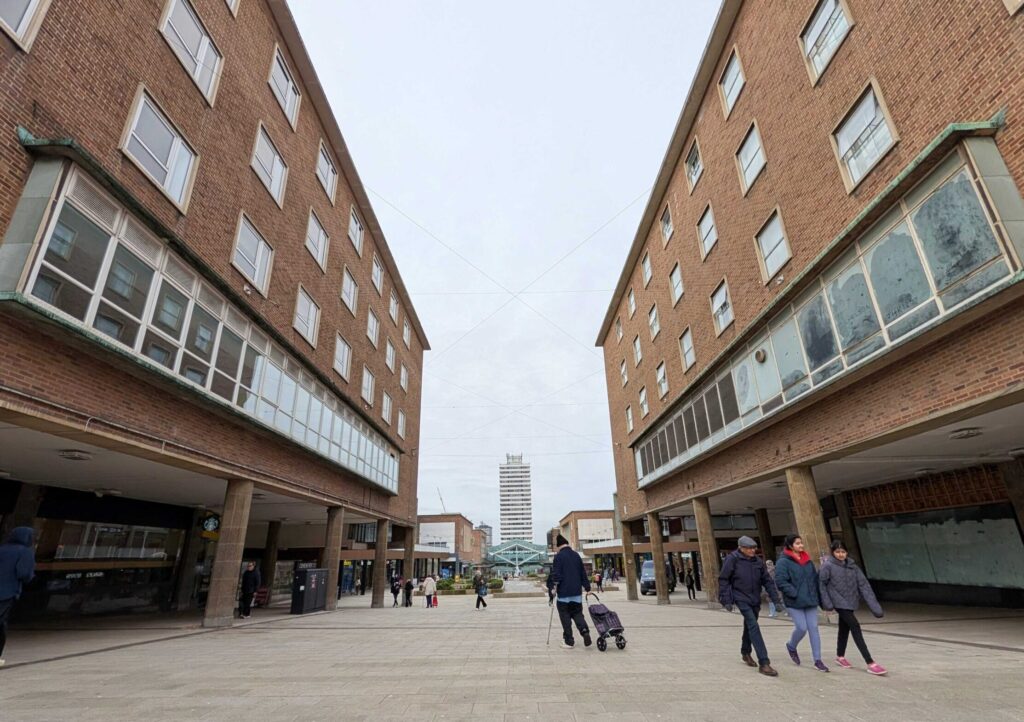
Coventry’s planned precincts were the first fully pedestrianised city centre in Europe. Credit: Mike Sheridan/Place Midlands
There is undeniable beauty and craft in the city’s planned central precincts, the first fully pedestrianised city centre in Europe, etched onto the blank canvas left by more than forty Luftwaffe bombing raids in the 1940’s.
But as the facades crumble on some of the city’s less successful experiments in pre-cast concrete design, Coventry, like other cities up and down the region, is being forced to re-examine its future form. So – what next for the city, perhaps the most famous regeneration project in the world?
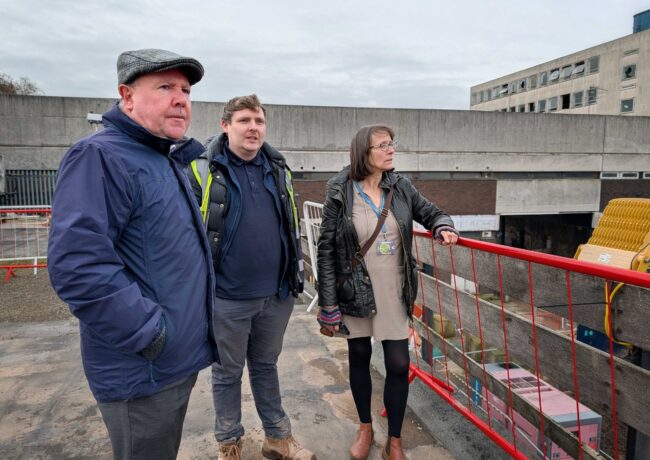
“Our ability as a city to reinvent ourselves has been tested, almost to the max really,” says Jim O’Boyle, the city council’s cabinet member for regeneration, looking out over a 17-acre hole in the ground which is due to become more than 1,500 homes as part of the City Centre South project.
“But we’re bringing our city centre back to life. I didn’t want to see it die.”
The arrival of spades in the ground on the scheme, led by housebuilder Hill Group in partnership with Shearer Property Group, has been a near 15-year process, bisected by a radical shift in thinking brought about by the Covid pandemic in 2020.
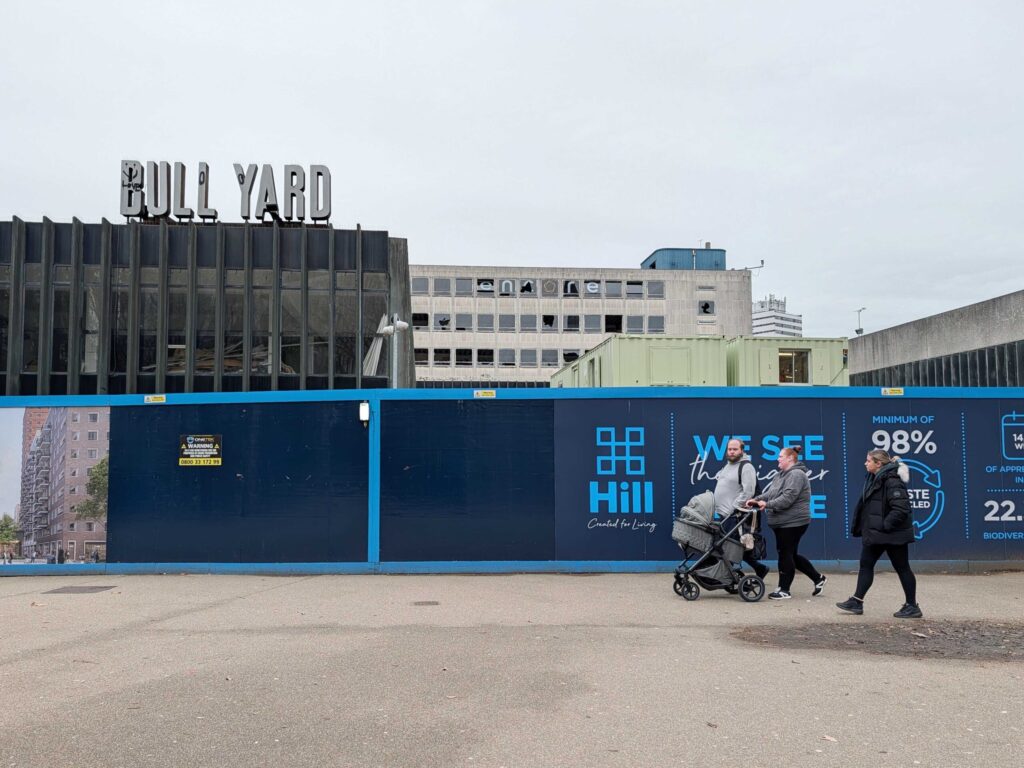
Demolition work at the 1,500 home City Centre South scheme is under way. Credit: Mike Sheridan/Place Midlands
Once complete, the development will provide up to 1,575 new homes, a mix of studio to three-bedroom apartments, with a first phase set to deliver 991 of these homes, alongside space for shops, hospitality and businesses, now under construction.
The project is the largest regeneration project to take place in the city since some of those early post-war rebuilding projects, backed by £110m of regeneration funding from West Midlands Combined Authority, and one which the local authority says will deliver a “step change in people’s perceptions of the city”.
But besides some spit and polish for the city’s image problem, the council hopes it will make Coventry a more ‘livable’ city, shifting the focus away from purely commercial uses and into a modern, multi-purpose sort-of place.
That ambition underlines how the shape of the project has changed since it was first conceived, originally intended as a retail-led proposal in 2010. The shifting sands of post-pandemic consumer patterns have forced a rethink in towns and cities up and down the country, but in Coventry, the timing of its key regeneration scheme is viewed a potential stroke of luck.
“How people shop, spend time and spend money has changed beyond measure in that 14 or 15 years [ since the start of plans for CCS ] and we’re in a lucky position in one sense that if our initial iteration had hit the starting blocks immediately, we may be in the situation where we’d built something that was out of date before we’d even finished it,” added Cllr O’Boyle.
“The world has changed and we’re trying to change with it, and for me, our city centre is responding to those changing demographics and the changes in our city.”
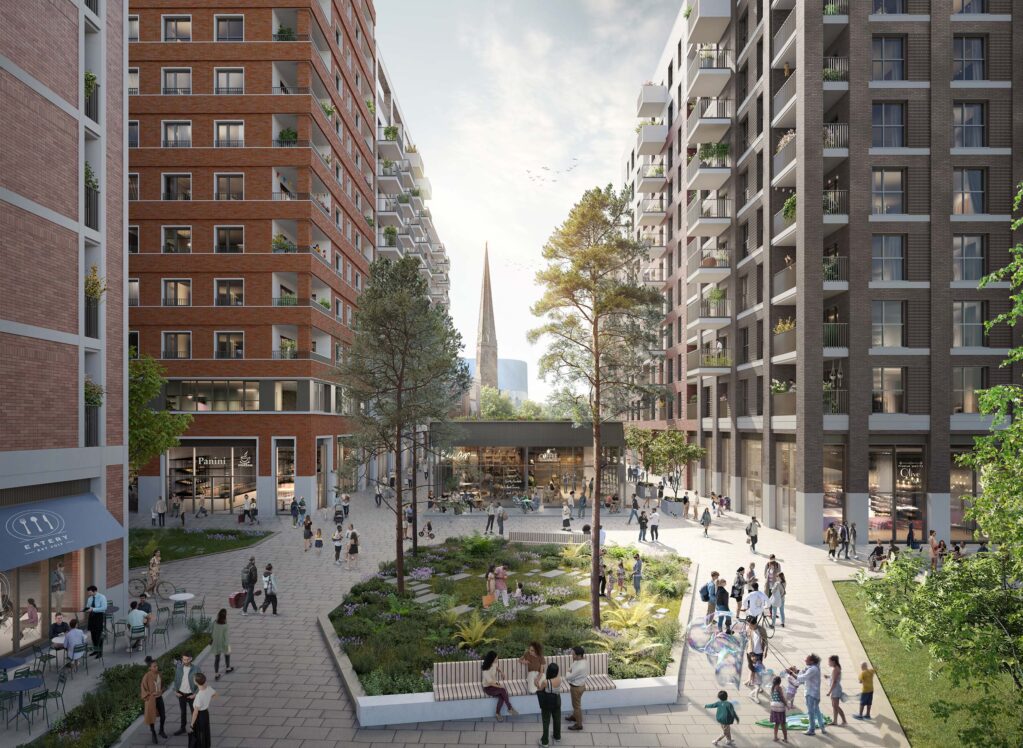
City Centre South will provide a green oasis in the centre of Coventry, developers say. Credit: Coventry City Council
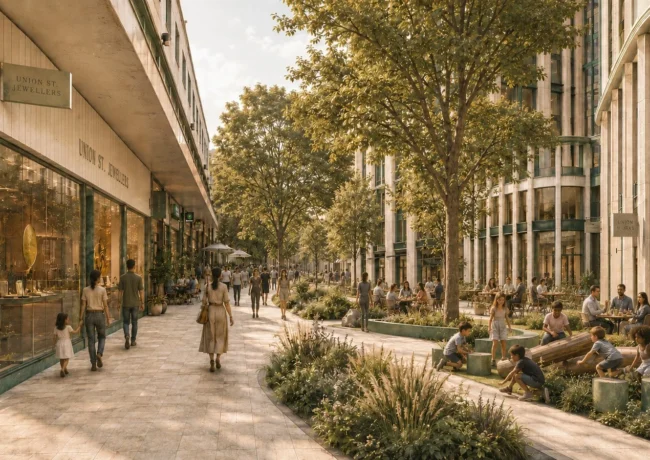
Around 200 of those first homes are classed as affordable housing, with 17,000 sq ft of public open space set to create a “green oasis” in Coventry’s heart, connecting the city centre with Friargate and the railway station.
Coventry is keen to nurture that vision for a green future into something more tangible for its industries, with hopes of rebuilding the region’s manufacturing sector for a new age.
The city has a habit of pulling a new industry out of a hat when it’s needed the most, and the region which was once the home of car manufacturers such as Triumph, Talbot and Peugeot before the UK’s motor-building industry spun out in the 1980’s is hoping a new era of green technology manufacturing can rise in its place – leaning on a skilled workforce with already deep manufacturing roots.
It would become the latest in a long line of signature industries which have variously included sheep trading, ribbon weaving, watchmaking and bicycle manufacturing over the course of it’s 1,000 year history.
“You know, you lose something, you gain something else as well,” adds Cllr O’Boyle, a former employee of the Peugeot plant at Ryton.
“We’ve got plans for advanced manufacturing, giga-factories, battery building, and all the rest of it. What I’d like to see in 10-15 years is we’ve reinvented a whole genre of new manufacturing, which has actually on-shored some stuff that that we’ve lost.
“There’s a massive economic opportunity here. We can be the place where the green industrial Revolution takes hole. We can and we should do that… there’s an opportunity and we can create so many good jobs, well-paid jobs as well. That’s what I want to see.”
For a city so often defined by what it has lost, the next chapter will be judged by what it manages to build back.
If the cranes over City Centre South are the first sign of a new era, Coventry is once again placing a bet on its oldest instinct: that reinvention is not just part of its past, but the only credible route to its future.