



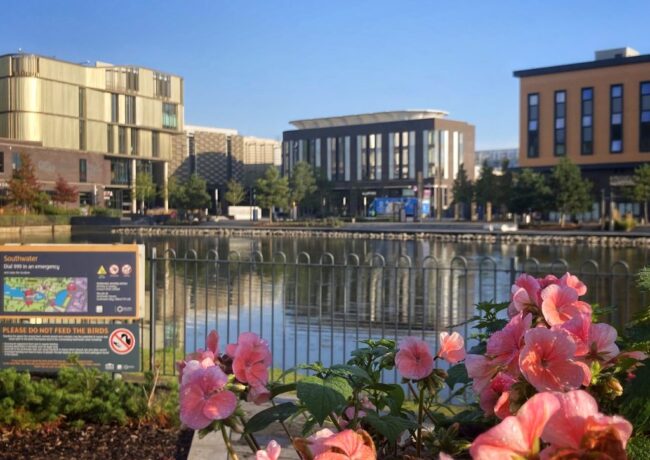
Telford is now third fastest growing town in UK, study finds
Several Midlands towns and cities are among the fastest growing in the country, but living standards remain much higher in the south of England, according to new research by the Centre for Cities.
Often cited as the fastest growing town in the Midlands, Telford is now the third-fastest growing in the entire country, the Shropshire town’s population having risen by almost 15% over the past ten years. Similar rises have been seen in Coventry, Leicester and Northampton over the past decade.
But living standards and productivity are failing to keep up with the region’s exploding population, with Telford, Stoke on Trent and Mansfield all among the least productive towns and cities in the country, according to the research.
Released this week, the Cities Outlook 2026 report showed that living standards in the UK’s top 11 cities and towns had risen twice as fast as in the rest of the country, with the residents of top performers Brighton and Worthing nearly 10% better off than most of the country in terms of disposable income.
The report says a “stark north/south divide” still exists in the UK – with higher levels of disposable income concentrated around the south of England, where residents have around 40% more cash to burn than their neighbours in the north, on average.
Barnsley and Warrington were two northern cities to buck the trend, which Centre for Cities chief executive Andrew Carter says is directly related to local policy choices on skills, transport, housing, and support for businesses.
“It is understandable that the government has shifted its emphasis onto the cost of living in recent weeks, but ultimately it is stronger economic growth that raises household incomes. Without growth, cost-of-living fixes can only ever be temporary,” he said.
“As the Prime Minister has said, 2026 needs to be the year that ‘politics shows it can help again’. The test, at the end of this year, will be whether we are seeing more jobs, higher wages, and stronger local growth in more places across the country.”
In productivity terms, Coventry is the best performing Midlands city, 20th overall of those surveyed and around ten places ahead of next-best Derby. In wages, Coventry is again the only Midlands city where average wages outperform the national benchmark of £758 per week, with Derby sitting just below the median at £755.
In the region’s largest city, Birmingham, residents earnings are, on average, around £30 per week lower than the UK national average and have some of the lowest levels of disposable income in the country – around £10,000 less on average per year than in best-performing Brighton.
Midlands housing stock grew fastest in Derby and Telford, both recording 1.2% increases, with only Milton Keynes (1.8%), Preston and Slough (both 1.5%) building more houses in percentage terms over the past decade.
The authors of the research say bringing down escalating housing costs is the key to improving levels of disposable income, with rents and mortgages identified as the biggest pressure on household budgets, calling for further reforms to a “restrictive” and inconsistent planning process to boost housing supply.
“Public confidence in economic policy has been weakened by more than a decade of feeble wage growth, rising living costs and repeated claims of recovery that have not been felt by many households and places,” the report adds.
“For growth to be ‘felt by everyone, everywhere’, improvements must be visible in people’s daily lives through better jobs, higher pay and stronger local economies.
“With national and local policy frameworks now established, the focus must shift decisively from announcement to impact, and from managing pressures to generating growth that lasts. The test at the end of 2026 will be whether these reforms are beginning to deliver more jobs, higher wages, and stronger local economies in more places across the country.”

