


Lovell buoyed by West Midlands growth as schemes gather pace
Housing developer Lovell says it’s enjoyed an “incredibly strong” year in the West Midlands, on the back of a healthy set of annual results released to the London Stock Exchange last month.
The firm, which specialises in partnerships with public and third sector organisations, says key developments in Birmingham and Telford have seen almost 400 homes completed in the region, as it looks ahead to larger schemes for the coming year.
Lovell was appointed as Birmingham City Council’s lead developer for the 3,500 home Druids Heath regeneration scheme earlier this year.
In February, the company reported a record set of results for 2025, with revenues up 5% of £903m and operating profit up 16% – contributing to parent company Morgan Sindall Group plc’s full-year results, which also saw its order book increase to £2.3bn.
Stuart Penn, managing director for central at Lovell, said: “The past year has been incredibly strong and is defined by the calibre of projects that we are delivering across the West Midlands.
“Growth has come in the form of a continued focus on regenerating the region and supporting local housing needs. This included our appointment as preferred developer for the Druids Heath regeneration by Birmingham City Council, delivering approximately 3,500 new homes over the next 20 years.
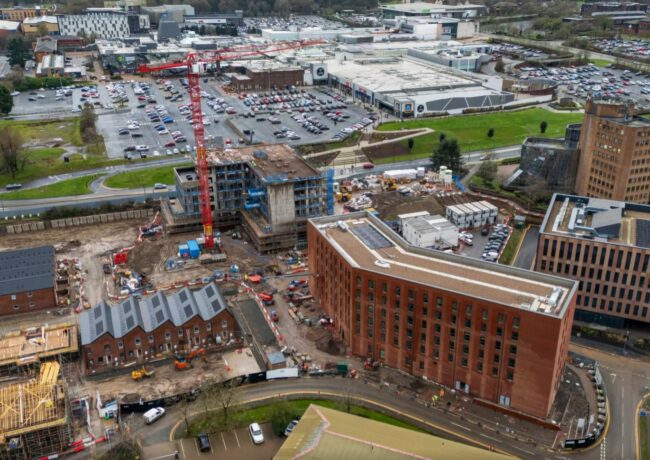
A development of over 100 homes at Telford’s flagship Station Quarter development, built on behalf of council-backed housing provider Nuplace, is due for completion this year.
The firm is also set to build 193 homes at Gladstone Rise in Stoke-on-Trent, and will pick up work on a stalled site on Hollyhedge Close in Walsall for housing association, WHG.
“We’ve also gathered pace on the Station Quarter development in Telford, where we’re working to deliver 105 homes for Nuplace, the council’s wholly owned housing company, and Legal and General Affordable Homes,” he added.
“As part of the scheme, we’ve provided 364 weeks of apprenticeships, 100 volunteering hours with community groups and created or retained three new roles – supporting wider regeneration beyond housing.”