



Commentary
Q&A | Muse’s Maggie Grogan
As a developer and joint venture partner in ECF and Habiko, Muse is a critical player in regeneration right across the UK. Place Midlands spoke with regional managing director Maggie Grogan to hear the latest on how its projects are shaping up.
What’s the background to how you came to head Muse in the Midlands?
Muse launched the Midlands office in 2022, and having spearheaded our entry into the region, I’ve been lucky enough to be managing director for the Midlands since that time.
Born and raised in Solihull, it’s a real privilege to play a role in the success of our region – now leading the regeneration of my own town centre – with an experienced team equally embedded and committed to what we do.
Across the Midlands, we’re delivering homes and infrastructure, creating quality jobs, and enhancing public spaces for communities to enjoy across Solihull, Wolverhampton, and West Northamptonshire.
Originally, I was part of the Muse team in the North West, and supported the delivery of Salford Central: an ambitious 20-year masterplan, including 1,000 new homes, workspaces, infrastructure, and public spaces.
However, I’ve also delivered complex regeneration projects right across the country.

Plans have advanced this year for Salford Central’s last residential plot. Credit: planning documents
What makes the Muse proposition unique in the Midlands?
We work together with local authorities and the public sector to deliver complex regeneration and placemaking. Muse has had huge success across the country with this partnership approach, delivering bespoke place-based solutions.
For example, ECF – a partnership between L&G, Homes England, and Muse, and formerly known as the English Cities Fund – targets those opportunities that the market deemed too complex or challenging to deliver.
By leveraging Muse’s connections and expertise in the Midlands we’ve been able to bring ECF to the region for the first time.

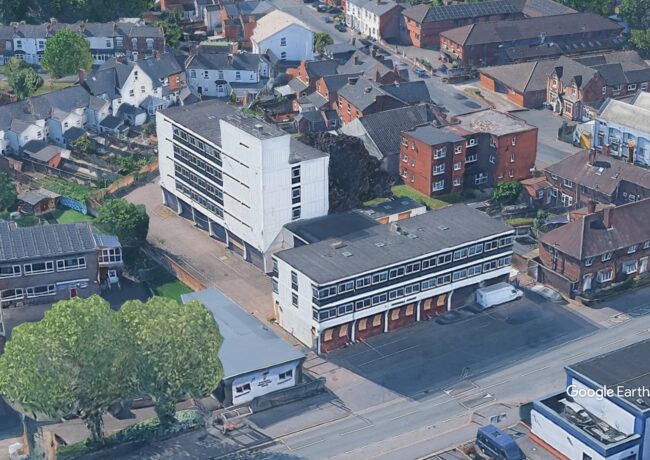
Smithgate will include 1,000+ homes. Credit: Muse
Working with our colleagues at L&G and Homes England, we are now delivering more than 1,000 new homes at Smithgate in Wolverhampton, and a new neighbourhood at Greyfriars in West Northamptonshire.
We also have a new partnership, Habiko, which is made up of PIC, Homes England, and Muse. With a bold objective to deliver 3,000 affordable and sustainable new homes, we are actively looking for new opportunities across the Midlands.
What’s been the highlight of the year so far for Muse in the Midlands?
Across each of our places we have made real progress in the last 12 months.
We submitted a planning application for the regeneration of Mell Square in Solihull, and strengthened our collaboration with the University of Warwick to deliver a HealthTech Campus at Arden Cross.
We achieved planning consent for Smithgate, and entered into a partnership with West Northamptonshire Council to deliver the regeneration of Greyfriars.
Every place is unique, with its own challenges, complexities and opportunities, and must move at its own pace. However, for me, the highlight has been watching the Muse team grow and take real ownership of delivering across the region, working together with our local partners.
As these are such long-term projects, can you give us project overviews on each of Muse’s Midlands schemes?
Taken together, we are delivering over 6,000 new homes along with commercial spaces to support over 30,000 new jobs, vibrant public spaces, and new cultural destinations.
- Arden Cross is a £3.2bn regeneration development facilitated by the HS2 Interchange Station at Birmingham International. Alongside thousands of new homes, and tens of thousands of new jobs, we are delivering a new Arden Cross Innovation District which will be anchored by the HealthTech Campus
- Smithgate in Wolverhampton is fundamental to the city council’s strategy to boost the city centre offer, invest in civic spaces, and deliver homes. Smithgate will deliver over 1,000 new homes, including affordable homes, as well as enabling an enhanced Market Square
- The regeneration of Mell Square in Solihull town centre will deliver exciting new retail and commercial opportunities, including for independent businesses. With new green and public spaces, Mell Square is also an opportunity to invest in Solihull’s evening and nighttime economy and deliver around 1,600 new homes.
- Greyfriars in Northampton town centre will be a vibrant new district anchored by new cultural destinations, public spaces, shops, bars, and restaurants. Over 1,000 new homes will ensure the neighbourhood is sustainable and energetic, with homes for the whole community
Our approach is place-based – tailored to the needs of each community. It’s never one-size-fits-all.

Arden Cross in Solihull, one of the major projects Muse has in the region. Credit: Muse
What do you see as the main attributes of the region that make you excited to be developing here?
Across the Midlands, both East and West, we benefit from proactive and positive councils and combined authorities which want to drive investment and make things happen.
When combined with the fundamental assets in our region – excellent transport infrastructure (with HS2 still to come), world-class universities, a young and skilled population, cultural destinations, alongside innovative and high-growth sector specialisms, for example in health, automotive, creative and digital – we know the Midlands will succeed.
The region has an opportunity to be the UK’s engine for innovation and inclusive growth. Our role, as placemakers, is to accelerate that momentum and deliver against this potential.
We focus on how our work can leverage or enhance the region’s competitive advantage – giving families access to quality homes, supporting vibrant town centres, or boosting innovation to accelerate economic opportunity.
For example, the HealthTech Campus at Arden Cross will leverage the Midlands’ competitive advantage in life sciences, create tens of thousands of jobs, and boost economic growth and innovation across the UK.
What would you like to see happen to make the Midlands’ case even stronger?
As a region, we must continue to come together and work at scale. Combined authorities have proven to be highly effective at bringing together the public and private sector around shared challenges and opportunities.
The new East Midlands Combined County Authority is still a fledgling organisation but has shown it has huge ambition and a drive to deliver, already we can see the partnership model creating real value.
There is an opportunity to mirror the success of the West Midlands Combined Authority, fund new infrastructure, invest in skills, and stimulate greater private sector investment.
With fully firing CAs – working together across the East and West Midlands – the region as a whole will be a dynamic force nationally and internationally.
How encouraged are you by the government’s actions so far in areas such as planning, infrastructure, and trying to boost housing?
We’re supportive of any policies which can help deliver new homes and regeneration more quickly and more effectively.
Across the Midlands, we’re lucky to work in partnership with local authorities which want regeneration to happen.
If we have challenges, we know we can work together to find solutions. Over the last three years we’ve proven that by working with our partners we can deliver at scale and at pace.
With the right partnerships – locally, regionally, and nationally – the Midlands can set the pace for regeneration nationally.