


Wild: HS2 reset due ‘by the end of the year’
A long awaited reset of the high-speed rail project connecting Birmingham with London could yet drag on until December, after chief executive Mark Wild said the updated programme would be delivered by the end of 2026.
In an update this week, Wild said the construction programme was “off to a great start” in 2026, adding that the reset which set out how the remainder of the project would be delivered was on course to be completed by the “end of this year”.
The government launched a full review of the HS2 programme in June last year, with transport secretary Heidi Alexander adding it could take up to 18 months to sort out the delayed project, which she said has been beset by spiralling costs and shifting timelines. HS2 has cost £43.6bn so far, according to the latest six-monthly report to Parliament.
“We’re making great progress, helped of course by the certainty of a four-year settlement in last year’s spending review,” said Wild.
“We’re very, very clear of our priorities in the next four years, and we’re on track to deliver the baseline schedule by the end of this year. As we’ve always said, it’s taking a couple of years to do this. Why is that? Well, we’ve got to get it right, because this reset will be the last time that we do it to the end of the job.”

HS2 chief executive Mark Wild says a planned reset of the project is nearing completion. Credit: HS2
Former Crossrail boss Wild was appointed to lead HS2 in May 2024, and was immediately tasked with a full review of the programme by the incoming Labour government, who said the project had been “mismanaged” by the previous Conservative administration.
No date has ever been formally offered for the delivery of the revised programme, other than to say it would take place in 2026, although an announcement was anticipated this summer.
“Mark Wild’s work on the reset has shown that HS2 Ltd did not have an accurate assessment of how much work had been delivered, or of how much was left to do,” said transport secretary, Heidi Alexander, in an update to parliament delivered in March.
“I am determined to explore every opportunity to remove the over-specification and complexity from this project to bring down costs and delivery timelines. This will ensure the updated cost and schedule estimates are robust, rather than rush the process and risk publishing figures that we do not trust.”
Having spent the last year working on the plans, the government announced it was considering revising down the top speed of trains on the line from the originally specified 360kph(223mph) to 300kph(186mph), part of cost saving measures which the government said would create a “realistic and controlled path” to completing the remaining work on the line.
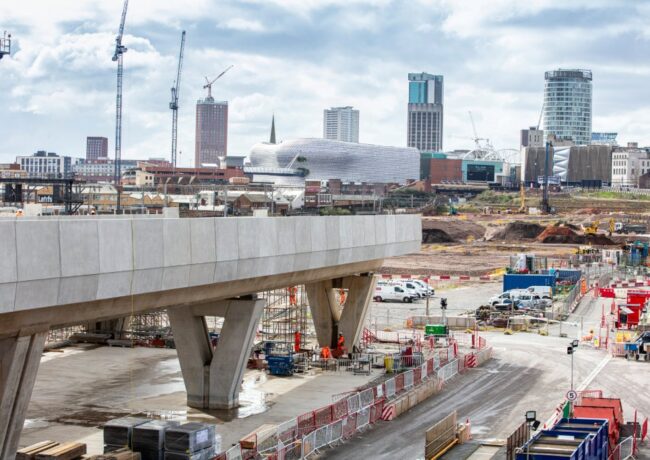
More than 2,700 concrete viaduct segments have now been manufactured in Warwickshire for the massive Delta Junction currently under construction near Curzon Street in Birmingham, and in 2025 the project also celebrated the completion of all tunnelling on the proposed route between Birmingham and Old Oak Common.
“Clearly we’re resetting the programme, but while we do that it’s absolutely essential that very single day we maximise the amount of productivity that we get for the amount of public money that we spend,” added Wild.
“I’m really pleased with productivity. We’ve achieved many notable milestones in the past year and we’ve got off to a good start in this financial year.
“All the tunnelling between Old Oak Common and Birmingham Curzon Street has been completed. If you go to Curzon Street you’ll see a big change – 2,000 piles have been installed that will eventually support the very impressive terminal station that will be built on top of it. Just next door in Coleshill Station in Birmingham, we’ve completed the manufacturing of 2700 viaduct segments, and if you travel in that area you’ll see the enormous progress we’re making with Delta Junction.”