



Commentary
Collaboration still ‘critical’ to Birmingham’s rennaissance
A tumultuous local election has left the city with a radically changed political outlook. But a split on the council won’t derail the city’s regeneration as long as public and private sectors continue to collaborate effectively, writes Carl Potter, senior director and head of development and planning at CBRE.
The build-up to a local election can raise a number of questions, with speculation rife about how the result will affect individual regions and the country as a whole. Birmingham, in particular, seemed remarkably split, with no clear winner before or after the vote.
While there is concern that the city’s incredible regeneration process, that is well underway, could be impacted, one result will not cause a kneejerk reaction from investors.
In fact, with increased collaboration between the public and private sector, regeneration and development should continue to flourish.
Birmingham’s result directly after the count was ‘no overall control’ (NOC), with a coalition of at least three parties needed to meet the minimum requirement of 51 seats to form a majority. With all parties gaining a similar number of seats and no natural allegiances to form a majority, the media dubbed the result ‘the rainbow council.’
While on the surface this may seem concerning, it’s critical to remember that investment and development run to much longer timelines than the five-year political cycle. Naturally, investors and developers look at short-term changes, and will be closely following the results. However both are long games, and one result will likely not derail long-term strategies.
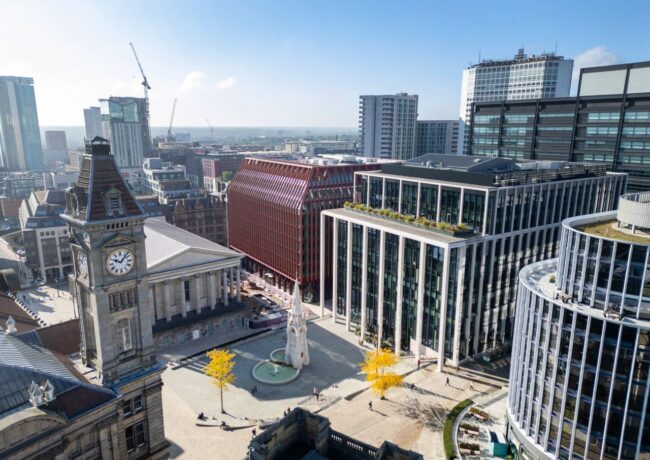
Birmingham is on the brink of a mammoth transformation, with a number of huge infrastructure and regeneration projects already either announced, committed to or underway. Central Heart, HS2/Curzon, Smithfield and Digbeth, alongside the metro expansion to name a just few, while all at varying stages, are all projects that will bring growth and investment to the city and will continue irrespective of control of the council.
Not only does it take time for newly elected councils to start making policies, particularly one where the majority is made up of multiple parties, but the incoming councillors are very unlikely to throw out every plan and policy made by their predecessors: it’s simply not practical.
In the past few years, the viability challenge within the sector has been seriously tackled both by organisations at a local and national level, as well as industry bodies and sector experts. For example, Homes England and the Combined Authority working with local authorities to accelerate project timelines and unlock suitable land by deploying a number of tactics, from distributing government-backed finance to using land assembly powers.
Regions are also establishing mayoral development corporations, with Birmingham’s formally being announced this month, which have seen success in helping forge collaboration between the private and public sectors, pooling resources to drive more ambitious and complex regeneration projects.
These efforts, which help to alleviate the housing crisis, provide serviced land and build new infrastructure, create opportunities and make the region more attractive for investment.
Public-private partnerships are mutually advantageous and moving forward, this collaboration will need to not just continue but expand. Different funding mechanisms and capital stacks are the lifeblood of regeneration projects, helping to share risk between multiple parties and gaining more, varied benefits.
It’s critical, however, that the new council sees the private sector as more than just a piggybank and instead works to understand why they are investing where and how, utilising this information to deploy resources and capital in the most efficient way. In short, for cities to be attractive to investors councils must talk to the people who are actually investing.
Investors have a wealth of knowledge that can be shared with and leveraged by politicians, as both parties have a shared aim of harnessing regeneration and development to improve cities.
While a NOC election result and a majority formed by coalition certainly carries more risk than one, strong, decisive leader, it doesn’t change the fact that Birmingham is brimming with opportunity and potential with developers and investors ready.
Not only is the city midway through several projects that will naturally attract investment, but its incoming mayoral development corporation will continue to drive development.
The incoming council can capitalise on this by developing stronger relationships with the private sector, gaining insights, securing funding and ultimately continuing to drive regeneration and development, all for the benefit of the city and the people who live in it.