


Harworth plots housing exit to target data centres
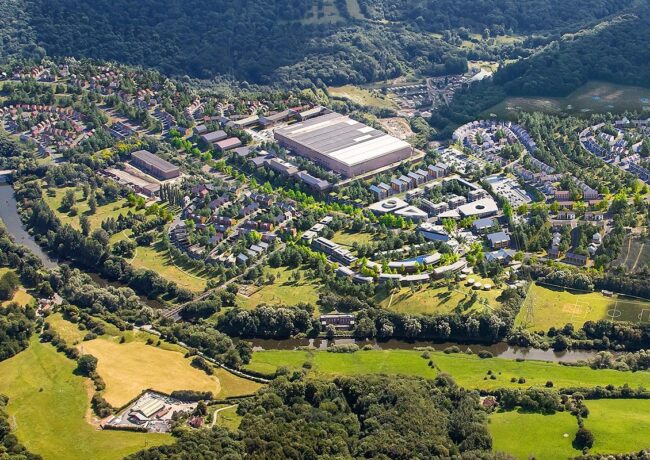
The firm behind the redevelopment of Ironbridge Power Station in Shropshire plans to quit the residential market in favour of industrial and data centre schemes, it says.
Harworth, which also has large residential projects in development at Thoresby Vale in Nottinghamshire, and Swadlincote in Derbyshire, says it wants to become a “pure play” powered land and industrial and logistics specialist, while exiting the residential sector.
The strategy will see Harworth refocus on strategic land, enabling works and selective development, resize its investment portfolio, and align its operating model and cost base with the new approach.
The firm is currently developing the 1.2m sq ft Chatterley Park industrial scheme in Staffordshire, with further large industrial projects planned at Bennerley in Nottinghamshire, and Cinderhill in Derby.
The announcement was contained in a formal response to an attempted takeover by Peel, which urged shareholders to reject a 172.5p per share offer, which Harworth said priced the business at a 42% discount to its estimated potential value of 297.4p per share..
According to the statement, the firm has 3.8m sq ft of industrial & logistics land that it says is “construction-ready”, with a further medium-term pipeline of 9.6 m sq ft.
Harworth described Peel’s offer as “highly opportunistic”, arguing that it had been timed to take advantage of the gap between its share price and the underlying value of its assets amid wider weakness across the UK listed real estate sector.
It also claimed Peel would benefit from around £30.7m in stamp duty savings, equivalent to 9.5p per Harworth share, through acquiring the business via a takeover rather than direct property transactions.
Harworth’s directors, advised by Barclays and Peel Hunt, said they did not consider the offer fair or reasonable and unanimously recommended that shareholders reject it.
The latest move marks a further escalation in the increasingly public battle between the two businesses. Peel initially made an unsolicited approach for Harworth before going public with criticism of the company’s performance and arguing that it could run the business more effectively.