


Parker: £10bn investment must deliver more than buildings for Birmingham
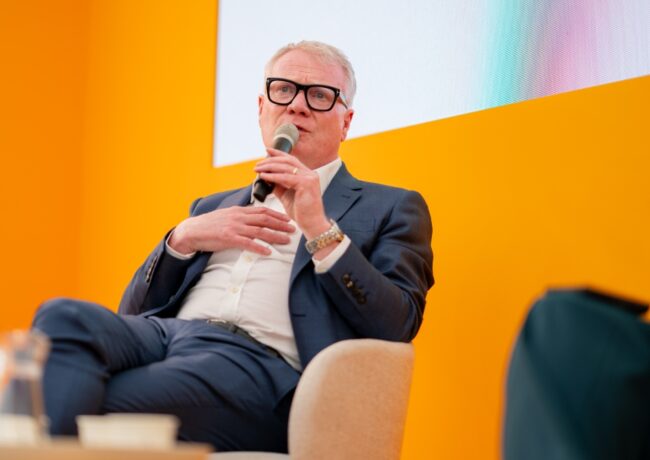
It’s the end of a hot afternoon at UKREiiF in Leeds and the Mayor of the West Midlands has just finished the latest round of his three-day charm offensive on the property industry.
Sat in a stifling marquee tent with a journalist at the tail-end of a busy week of meetings, panel events, summits and speeches is probably not where Richard Parker wants to be right now, but it’s certainly all part of the game.
The key announcement from the West Midlands delegation has been the formal establishment of East Birmingham’s Mayoral Development Corporation, designed to smooth the road for more than £10bn of investment, levered into the city using the crowbar of high-speed rail.
And while it’s something of a cliche to say the de-industrialised heartland of the West Midlands is at a crossroads – it has been so for thirty years at least – the times, they are certainly a-changin’.
But if narrowing the relative proximity to the UK’s largest economies in London and the South East is the end goal for investors eyeing up the nation’s next big property bubble, who will benefit from those incoming billions, other than the city’s land-owning classes?
The question seems to catch Parker off guard slightly, but the characteristically reserved former accountant unexpectedly lights up while discussing the ripple effect of up to 50,000 extra jobs, which he hopes will succeed where other regeneration projects have failed in the traditionally more down-at-heel areas of the city.
HS2 matters less because it gets people to London faster, and more because it changes the economic gravity of Birmingham, he says.
Government statistics show that in some areas of East Birmingham child poverty exceeds 50% and around 27% of adults have never worked – more than double the national average.
“We are now, I think, for the first time for a long time, addressing the deep seated challenges that started with de-industrialisation, were worsened during the financial crash, and made more difficult through austerity that punished some of those communities, some of the poorest in the country, let alone Birmingham,” he said.
“Frankly, they weren’t assisted by Covid or Brexit, and the cost of living challenges those communities face through the war Ukraine and the Middle East are making things worse.
“What we’re doing is not just a physical investment. The jobs we create and the investment we’re making to those communities is, firstly, physical investment we haven’t seen for several decades. But it’s also important that the jobs we create are going to be for many of the young people living in the surrounding communities.
“Around half the jobs will be first-time jobs, and for communities that have been left behind there’s no bigger hope than comes with getting a job, and there’s no bigger difference we can make to peoples lives than giving them access to that first job.
“For all the big talk about the numbers, like the billions of pounds of investment, the bit that is motivating me more than anything is not just changing the physical landscape. It’s about changing the communities that are adjacent to the investments that are being made.”
Underpinning all that investment is the arrival of HS2, the city’s long-trumpeted and heavily delayed high-speed rail link, so a government announcement earlier this month that high-speed trains will not be running into Birmingham for another decade will have been unwelcome, if unsurprising news.
Transport secretary Heidi Alexander’s House of Commons update laid out an earliest arrival date of 2036 for the first high-speed trains, alongside further cost-cutting measures for the country’s flagship transport infrastructure project.
But even if HS2 is less of an infrastructure project for the region, and more of a social intervention, the possibility of investors becoming spooked by increasingly lengthy delays to the timetable still puts those economic benefits at risk.
Nonetheless, the Mayor says the government’s decision to stick with the project for the long haul provides at least a degree of certainty for investors and developers, with land now due to be released around two stations at Curzon Street and Arden Cross.
“I wish it was being delivered sooner and it’s not going to be, but now my job is to make the best of the opportunity HS2 is going to provide to Birmingham and the region,” he said.
“My next discussions will be about how we work with HS2 on the land release by the two stations, so those don’t hold back further investment.”
The new East Birmingham MDC will help, speeding up the pipeline of investment and planning decisions, and largely elevating five of the largest development projects in the city above the cloud-layer of political mayhem unleashed by a tumultuous round of local elections this month.
Perhaps because of this, Parker seems fairly relaxed about the political ramifications of a Reform surge across the region which dropped many local authorities – including Birmingham – into no overall control.
“There’s not a council leader I’ve worked with or met to date, from whatever party, that doesn’t want to create more jobs for their communities, doesn’t want more transport investment, doesn’t want more affordable, social homes, and doesn’t want their economies to grow,” he added.
So East Birmingham’s latest round of regeneration looks set to take shape over the next decade, but it’s clear that cranes on the skyline will form only the visible signs of success.
The bigger ambition is whether investment can finally reverse decades of economic and social decline in parts of Birmingham which, despite sitting little more than a hundred miles from Leeds, remain far removed from the polished, prosperous future promised by investors and developers at UKREiiF.