


Mark Wild: HS2 reset is ‘well advanced’
A planned reset of the delayed HS2 rail programme will ‘break the cycle’ of delays and soaring costs which have plagued the scheme, according to chief executive Mark Wild.
A full reboot of HS2 is underway, with Wild aiming to fix three enduring issues which have delayed the £37bn project.
Earlier this year, the government launched a review of operations on the flagship high speed rail programme connecting Birmingham and London, saying there had been “too many dark corners for failure to hide in” – after a report released in July confirmed that there was no way of meeting the line’s original opening deadline of 2033.
Transport secretary Heidi Alexander said the delays were the result of “years of mismanagement, flawed reporting and ineffective oversight” on behalf of the previous government, and said the new administration had begun a year-long reset, including commissioning infrastructure expert James Stewart to lead a review into governance and oversight.
Now, former Crossrail chief executive Wild says details on the planned reboot of the programme are well advanced, with new project timescales and cost baselines expected to be released next year.
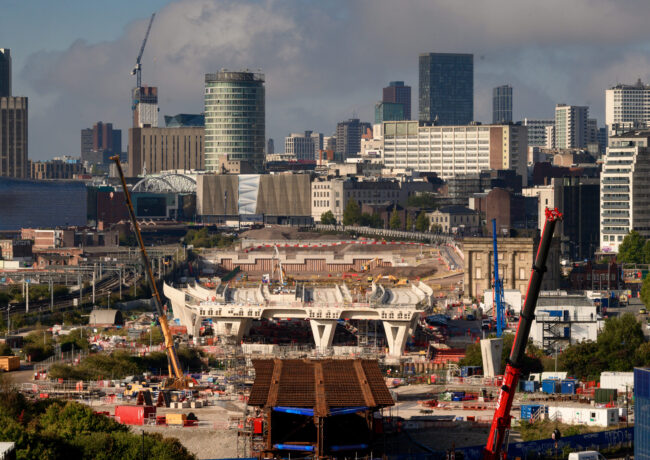
In a construction update on the scheme released this weekend, he said all tunnelling on the scheme was now complete, including three and a half miles of tunnelling near Coleshill known as the Bromford Tunnel.
However he re-iterated the challenges facing the reset, including three critical problems had caused work to fall behind – including beginning construction before the completion of design work, inefficient contracts signed with supply chain companies, and the original structure of HS2 Ltd, which he says was “not set up to deliver the whole system”.
“Despite all of the great achievements of production in this year on HS2, we’re not where we thought we would be or where we’d planned to be,” he said.
“We’ve spent the past year working out in great detail all of the dependencies between the building blocks of HS2, working out the sequence of the work.
“We’re not just building a civil engineering project, we’re building a railway, which is a complete system that includes the track, the overhead line, the electrical engineering, the train, the depots, the sidings. All of these things come together in a singular system, and we’re behind.”
He added that lessons learned on the London Crossrail project, such as ensuring that civil and electrical engineering programmes were sequenced in the correct order, would break the cycle of cost increases and delays which led to project costs soaring past the project’s initial £37bn budget.
“The best way to get this job done is to do the building blocks in the correct order, complete the civil engineering, give access to the track and the overhead line, then do the electrical engineering, then bring the systems on board and finally, of course, bring the whole system together in testing and provide enough time for operational proving at the end,” he added.
“This is what we did in Crossrail, and that’s what we’re doing right now. That process is well advanced.”
The department of transport says it plans to publish an updated programme in 2026.