


Spotlight: Ward says East Midlands ‘won’t shy away’ from ambitious housing goals
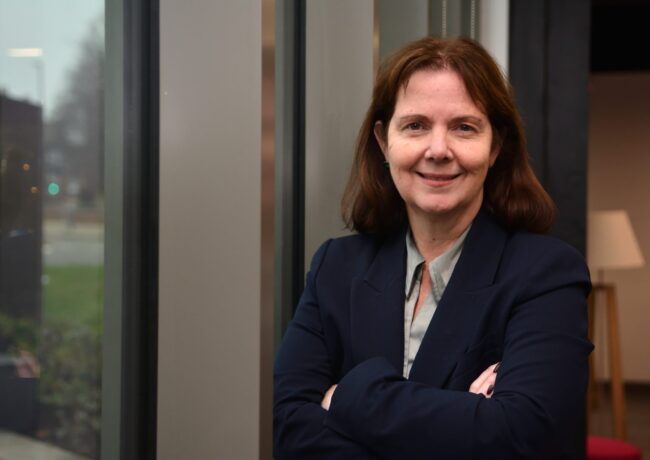
East Midlands Mayor Claire Ward says a more joined-up approach will be critical to delivering 100,000 new homes over the next decade, as her fledgling combined authority prepares for a pivotal year.
Ward admitted the first eighteen months have been a “whirlwind” for the start-up mayoral administration, which has been required to get up to task quickly from a standing start, following inaugural elections for the region in 2024.
Now almost halfway into her four-year term, 2026 will be the year when more residents will start to feel the impact of having a regional mayor, she told Place Midlands, during a visit to EMCCA’s headquarters in Chesterfield.
“I walked through the doors of this office in May 2024, and we had two rooms, including this one. They’d just unpacked the computers from the boxes, many of them weren’t even connected, and we had a skeleton staff of interims and secondees of around 20 people, some of whom were only part-time,” she said.
Fast-forward to just over a year and a half later, a beefed-up staffing roster of just over 200 people will assume responsibility for public transport services across the region this year, hot on the heels of a £2bn city region transport settlement from central government.
The move will see four separate public transport authorities combined under the umbrella of the East Midlands Combined County Authority – perhaps the most complex item of work to land in the in-tray of the administration so far.
But with the work comes an improved multi-year financial settlement for improving the region’s transport infrastructure, a key manifesto pledge for Ward in 2024, and evidence of the more integrated and long-term improvements that can be brought to a region by a bigger authority.
“There’s already more money coming into this region as a result of having a mayor and a combined authority than there would be without it,” she added.
“In that first year, it was £120m more in our region as a direct result, and when you look at things like the transport settlement, we’re traditionally underfunded across the region. Part of the reason is that there’s never been a collective pitch or ambition across a wider area.”
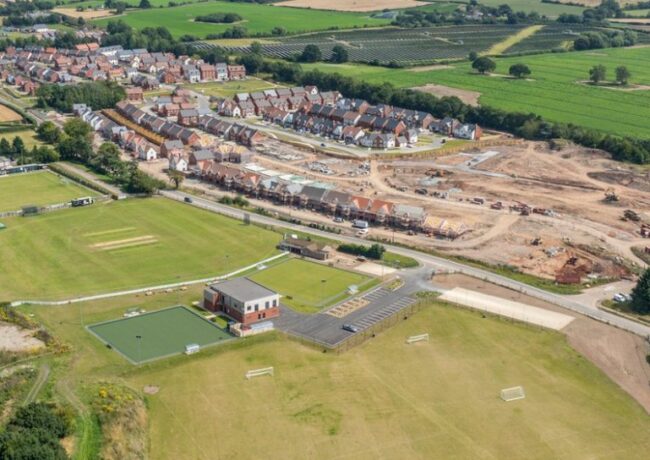
But in a move which mirrors the national government’s current focus, the most eye-catching policy claims have revolved around house-building, with a self-imposed target of 100,000 homes set to be built in the region over the next decade, set against the government’s own hopes of building 1.5m homes across the country before the end of the current parliament.
“It’s an ambitious figure, and I don’t shy away from that.
“But I’d rather be ambitious and just fall short than not get anywhere near it, so I’m absolutely pitching to get to that point, and we’ve started already.
“We’ve got 2,000 new homes in the pipeline with our Brownfield housing fund, and as we start to look at the land and the opportunities of working across with our strategic Place partnership with Homes England, I think we’ll see many more of those homes coming to fruition.”
That partnership with Homes England, described as a “significant milestone” by the organisation’s chief executive Amy Rees when it was signed last month, is already being brought to bear at Broad Marsh in Nottingham – where demolition work is set to begin on the long-awaited regeneration scheme later this year.
The agency bought up the site in March 2025 in a milestone moment for proposals dating back over two decades.
But what might the new agreement mean for other parts of the region facing similar obstacles? Ward hopes the deal will go hand in hand with a shift in thinking, which will see more joined-up planning on larger sites across the East Midlands.
“The strategic place partnership allows us to direct a laser focus on the areas where we think development of homes can take place within the region, and allow us to funnel in all those elements of support, such as the transport offer in those areas and the infrastructure, but also the support of our constituent councils and districts.
“It’s more than funding, it’s thinking about things like transport and making sure that we’re planning ahead for when and where the opportunities might be, and how people get from there to the areas where we think there’s going to be significant numbers of new jobs.
“I think the ability for us to create a spatial plan will be good for this region. It will reinforce the opportunities that the region has, and allow us to think about how we link all of that development with our local growth plan.
“We’ve already launched a spatial vision which sets out seven corridors or opportunities for the development of the region, and I think when you look at the Trent Arc, you will see that certainly the corridor for those two cities allows for development of a significant number of homes in that area.
“But also in the Trent Supercluster, where we’re going to be developing our green energy clusters, at West Burton with the fusion Energy from STEP, at Cottam with SNR and the digital data centres, and also the hydrogen scheme at High Marnham.
“We anticipate that we’re going to need something in the region of 6,000 new homes to support West Burton, so you know, we need to be looking again at a mixture of the right sites to support the expansion of some of our towns and communities – but also making sure that they have the right infrastructure as well.”
Some of those plans pre-date the advent of the combined authority in the East Midlands by a long way, and while the new administration may be able to tie together some of the more nebulous threads surrounding grand schemes such as fusion energy, and play a part in solving land assembly issues around large house building sites, there’s clearly still a long way to go before the region can claim to be punching alongside some its regional rivals.
Ward says she’s not averse to borrowing a few ideas from neighbouring authorities – and wouldn’t rule out the use of mayoral powers such as Mayoral Development Corporations to speed through larger schemes, a tactic being employed in the West Midlands by fellow Labour mayor Richard Parker.
“We need to build a region that works for us, and we will look to the others. We’ll take some ideas, but we’ll improve on them, and we’ll make them our own.
“We’re doing all of that from scratch with a region of 2.2 million people, with two cities and large numbers of small towns and communities, and a good rural element to our region, which makes it very different from some of those other regions.”
With the region’s first ever mayoral administration nearing the halfway point in its four-year term, the Labour mayor is likely to be facing a radically shifted electoral picture in 2028, with the Labour party lagging well behind both the Conservatives and the Reform Party according to most polls.
Nonetheless, Ward says 2026 will be a turning point for an industrious part of the country desperately seeking to redefine its future alongside more prosperous neighbours.
“I will be judged and would expect to judge myself on the progress that I’ve made on my manifesto commitments,” she added.
“I think people will be able to make judgement on that, and I see 2026 as being ‘that year’ where people start to identify those projects that we have chosen to put funding into – and where we’re making a significant difference to this region.
“In the next 10 to 15 years, I expect this to be the region where people don’t just want to come to live and work, but somewhere they absolutely want to stay as well. I hope they’re proud of this region, and that they feel they can get on, and have access to high-quality jobs, great skills and good earnings that allow them to be able to live here and enjoy a good life.”